Aachen, Germany
- 265,208 people
- 14 places to visit
- 50.7753, 6.0839
Places to Visit (14)
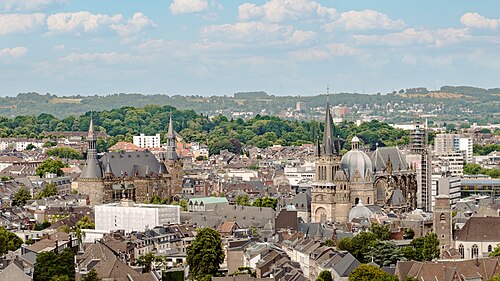
Aachen, a historic city located in western Germany near the borders with Belgium and the Netherlands, is known for its rich cultural heritage and significance as a center of power during the Middle Ages. With a population of approximately 250,000, it is the westernmost city in Germany and serves as a vibrant hub for education, industry, and tourism. The city's name is derived from the Latin term "aquis," reflecting its historical association with thermal springs that have drawn visitors since Roman times. The thermal baths, built by the Romans in the 1st century, eventually led to Aachen becoming the favored residence of Charlemagne, who made it the capital of his empire in the late 8th century.
One of Aachen's most notable landmarks is its cathedral, the Aachen Cathedral (Aachener Dom), which was designated a UNESCO World Heritage Site in 1978. Completed in the 9th century, the cathedral is a stunning example of Carolingian architecture and served as the site of the coronation of 30 German kings and 12 queens. The Palatine Chapel, part of the cathedral complex, features a striking octagonal dome and intricate mosaics, reflecting both Byzantine and western architectural influences. Aside from its cathedral, Aachen is also famous for its annual Christmas market and historic old town, where visitors can enjoy a blend of medieval and modern attractions, including cafes, shops, and museums. Aachen is home to several institutions of higher learning, including the RWTH Aachen University, which is known for its engineering and technology programs and attracts students and researchers from around the globe.
In addition to its historical significance, Aachen is renowned for its contributions to culture, particularly in the realm of chocolate and printmaking. The city is associated with the famous brand Exquisite chocolates and has a rich tradition of producing high-quality treats. The city's proximity to Belgium amplifies its reputation as a chocolate lover's destination. Aachen hosts various cultural events throughout the year, including music festivals and art exhibitions, that celebrate both its local heritage and contemporary creativity. With its combination of historical charm and modern amenities, Aachen continues to be a city that honors its past while looking toward the future, making it a unique and attractive destination within Germany and beyond.
Facts about Aachen
- Aachen is home to the Coronation Cathedral (Aachener Dom), a UNESCO World Heritage Site, which served as the coronation site for 30 German kings and queens between the 9th and 19th centuries.
- The city was a favored residence of Charlemagne, who established the Palatine Chapel in Aachen, which is considered one of the masterpieces of Carolingian architecture.
- Aachen is known for its hot springs, which have been used for therapeutic purposes since Roman times, making it an important spa city in Europe.
- The International Charlemagne Prize, awarded annually in Aachen, recognizes individuals or institutions for their contributions to European unity.
- In Aachen, you can find the only remaining original piece of the imperial crown of Charlemagne, known as the 'Aachen Gospels'.
- The city has a unique tradition of hot chocolate and gingerbread, particularly known for its 'Aachener Printen', a type of gingerbread that has Protected Geographical Indication status.
- Aachen hosts the University of Applied Sciences, which specializes in engineering and technology, contributing to its identity as a center for innovation and science.
- The famous annual Aachen Christmas Market is one of the largest and most traditional Christmas markets in Germany, attracting visitors from all over the world.
- Aachen is located at the tripoint of Germany, Belgium, and the Netherlands, making it a crossroads of cultures and languages in Europe.
- The city's landmark, the Elisenbrunnen, is a neoclassical monument featuring thermal springs that have been a health attraction since the 18th century.