Abéché, Chad
- 139,983 people
- 2 places to visit
- 13.8359, 20.8434
Places to Visit (2)
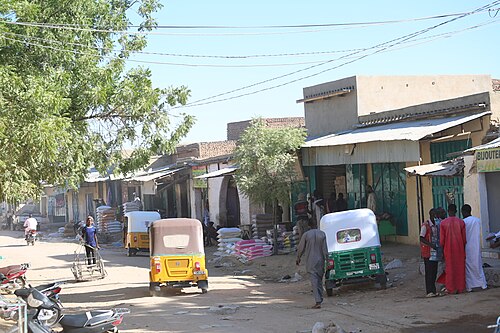
Abéché is a prominent city located in eastern Chad, serving as the capital of the Ouaddai Region. It lies approximately 1,000 kilometers from the national capital, N'Djamena, and is strategically situated near the border with Sudan. Abéché has a rich historical background, having been a key center for trade and cultural exchange, especially during the 19th century when it was part of the Ouaddai Sultanate, an important pre-colonial political entity. The city's location made it an essential stop along trans-Saharan trade routes, facilitating the movement of goods and people.
The population of Abéché is diverse, comprising various ethnic groups, including the Arab, Sara, and Zaghawa peoples, which contributes to the city's vibrant cultural landscape. Its economy primarily revolves around agriculture, with the surrounding fertile lands supporting the cultivation of crops like millet, sorghum, and cotton. Additionally, livestock farming plays a significant role in the local economy. Over the years, Abéché has faced various challenges, including economic hardships and insecurity due to regional conflicts, particularly spillover effects from internal strife in neighboring Sudan and the presence of rebel groups. Despite these challenges, the city has remained a crucial administrative and economic hub in Chad.
Abéché is home to several institutions, including the Abéché University, which enhances educational opportunities for the local populace. The city's infrastructure has seen gradual improvements, yet it still faces significant challenges such as limited access to basic services and healthcare. With its blend of cultural heritage and economic potential, Abéché continues to be a focal point in eastern Chad, representing both the opportunities and difficulties faced by the region. As Chad navigates the complexities of its socio-political landscape, Abéché remains a testament to the resilience of its people and their enduring connections to this historic trade center.
Facts about Abéché
- Abéché is one of the oldest cities in Chad, historically serving as a significant trading hub in the region.
- The city was the capital of the historical Kanem-Bornu Empire, which influenced much of the Sahelian region in West and Central Africa.
- Abéché is home to the Abéché Palace, a historical site that once served as the residence of the King of Borkou and is a significant cultural landmark.
- The city features the Abéché Museum, which showcases the cultural heritage and historical artifacts of the Beja people and other ethnic groups in the region.
- Abéché is located near the border with Sudan, making it a strategic point for trade and cultural exchange between Chad and its neighbor.
- The local economy of Abéché is heavily influenced by agriculture and animal husbandry, distinguishing it from more urbanized places like N'Djamena, the capital of Chad.
- Abéché has a diverse population, with various ethnic groups, including the Arabs, Sara, Kanembou, and Zaghawa, contributing to a rich cultural tapestry.
- The city hosts an annual festival that celebrates the traditional music and dance of the local communities, highlighting its unique cultural identity.
- Abéché serves as a key logistics point for humanitarian initiatives due to its proximity to regions affected by conflict and displacement.
- The city is known for its vibrant markets, where local crafts, textiles, and traditional goods are sold, contrasting with the more commercialized markets in larger cities.