Abū Ghurayb, Iraq
- 900,000 people
- 2 places to visit
- 33.2976, 44.0818
Places to Visit (2)
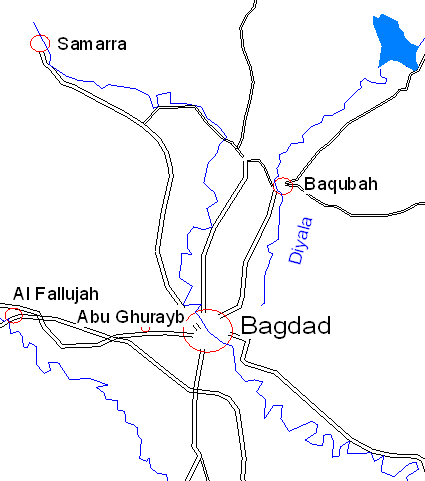
Abū Ghurayb is a city situated in the Baghdad Governorate of Iraq, approximately 15 kilometers west of the capital, Baghdad. Historically, Abū Ghurayb has been an important area, serving as a significant point of interest and a residential suburb for people working in Baghdad. The city features a mix of urban and rural landscapes and has seen population growth due to its proximity to the capital. The region has undergone various transformations, particularly during the latter half of the 20th century, becoming more developed as infrastructure improved and more people moved to the area.
The city gained international notoriety in 2004 due to the Abu Ghraib prison scandal, where reports emerged of human rights abuses by U.S. military personnel against prisoners. This scandal highlighted issues related to the treatment of detainees during the Iraq War and led to significant criticism of the U.S. military and its policies. Despite this tumultuous period, Abū Ghurayb has continued to strive towards recovering from the conflict and instability that plagued Iraq in the 2000s. Today, the area is characterized by a population that mixes various ethnic and religious backgrounds, predominantly Arab, with a mix of Sunni and Shia communities. The post-war recovery efforts have included rebuilding infrastructure, aiming for economic development, and improving living conditions for its residents.
Culturally, Abū Ghurayb reflects the broader influences of Iraqi society, with traditions, customs, and cuisine that are indicative of the region. The population has access to markets, schools, and mosques, fostering a sense of community despite the historical challenges faced by the area. Efforts to address educational needs and promote cultural initiatives are visible, with local organizations working to provide support to families and youth. As Iraq continues to navigate its post-conflict landscape, cities like Abū Ghurayb play a critical role in the nation's recovery and development.
Facts about Abū Ghurayb
- Abū Ghurayb is known for its historical significance as a location where various civilizations have coexisted over centuries, including Babylonian and Islamic empires.
- The town is located just 32 kilometers west of Baghdad, making it strategically important for both historical trade routes and contemporary military logistics.
- Abū Ghurayb gained international attention in the early 2000s due to the infamous Abu Ghraib prison scandal, which highlighted allegations of human rights abuses by U.S. military personnel during the Iraq War.
- It has a predominantly Arab population and is considered part of the broader agricultural region surrounding the Tigris River, known for its fertile lands.
- The town's name translates to 'Father of the Ghurayb,' with 'Ghurayb' referring to a type of bird, which reflects local cultural significance in the naming conventions.
- Abū Ghurayb contains remnants of ancient structures and is located near archaeological sites that date back to Mesopotamia, making it of interest to historians and archaeologists.
- The local economy has traditionally been based on agriculture, with staples such as wheat, barley, and various fruits being grown in the surrounding areas.
- Abū Ghurayb is home to various cultural festivities that reflect the rich heritage of the Iraqi people, including traditional music and culinary practices.
- The city has experienced significant rebuilding efforts after the destruction caused by the Iraq War, aiming to restore public infrastructure and services.
- Unlike more renowned cities like Baghdad or Mosul, Abū Ghurayb remains lesser-known in global discussions, yet it plays a crucial role in the socio-political landscape of Iraq.