Afragola, Italy
- 64,470 people
- 9 places to visit
- 40.9198, 14.3073
Places to Visit (9)
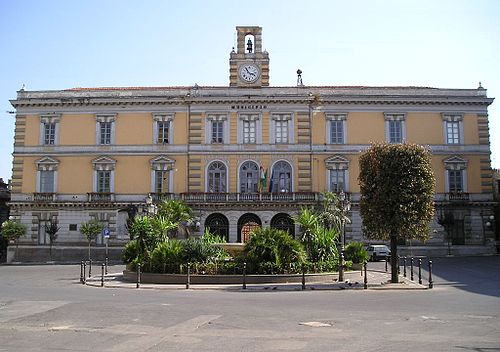
Afragola is a municipality located in the Campania region of southern Italy, within the metropolitan area of Naples. It lies approximately 12 kilometers northeast of Naples itself and covers an area of about 10 square kilometers. With a population of around 60,000 residents, Afragola is known for its strategic position that connects various transportation routes, making it an important hub for both commuters and travelers. The city is characterized by a mixture of residential and industrial zones, reflecting its historical development. Its proximity to Naples allows for easy access to the rich cultural and historical offerings of the larger city, while still maintaining a unique local identity.
The history of Afragola dates back to ancient times, with evidence of settlement in the area during the Roman era. Over the centuries, it has experienced various influences, culminating in a rich cultural heritage that is visible in its architecture and local traditions. Notable landmarks include the Church of the Holy Spirit, which showcases beautiful Baroque architecture, and the ruins of a Roman aqueduct that highlight the region's ancient past. The municipality is also home to several parks and green spaces, providing residents with recreational opportunities. The local economy is diverse, encompassing agriculture, commerce, and small-scale industries, which contribute to its self-sufficiency. The city is continuously developing, with recent infrastructure projects aimed at improving public transportation and enhancing urban living conditions for its inhabitants.
Culturally, Afragola celebrates various festivals and events throughout the year, reflecting its local customs and community spirit. The Feast of Santa Maria della Strada, for example, draws many visitors and features traditional music, food, and religious processions, offering a glimpse into the local way of life. The city's culinary scene is also noteworthy, as it is representative of the Campanian cuisine, well-known for its pizza and pasta dishes. As Afragola continues to evolve, it remains an integral part of the region's historical and cultural tapestry, balancing modernization with its rich heritage.
Facts about Afragola
- Afragola is known for its historical production of high-quality pottery, particularly during the Renaissance period, which has influenced the region's artistic heritage.
- The city houses the Church of Sant'Antonio di Padova, a stunning example of Baroque architecture that attracts visitors with its intricate designs and historical significance.
- Afragola is located near Naples, making it an important transit point for travelers heading to the Amalfi Coast and other nearby attractions, thus playing a crucial role in the local economy.
- In the 19th century, Afragola became known for its strategic position on the rail network, leading to its development as a transportation hub in Southern Italy.
- The city hosts the annual 'Festa di San Lorenzo,' a vibrant local festival featuring traditional music, food, and religious processions, unique to this region.
- Afragola is home to the ancient ruins of the Roman villa known as 'Villa of Afragola,' which reflects the Roman influence in the area and remains a site of interest for historians and archaeologists.
- The city's population has a rich blend of cultures, influenced by its history of trade and migration, which contributes to its diverse culinary scene.
- Afragola's local economy is significantly boosted by its proximity to the Capodichino Airport, one of the main international airports in Italy, facilitating tourism and trade.
- The city is set against the backdrop of Mount Vesuvio, offering unique natural scenery and outdoor activities that distinguish it from other urban areas in Italy.
- Afragola has a notable presence of modern architecture, particularly in its recent urban developments, reflecting the city’s growth and modernization efforts.