Agadez, Niger
- 149,549 people
- 4 places to visit
- 16.9742, 7.9865
Places to Visit (4)
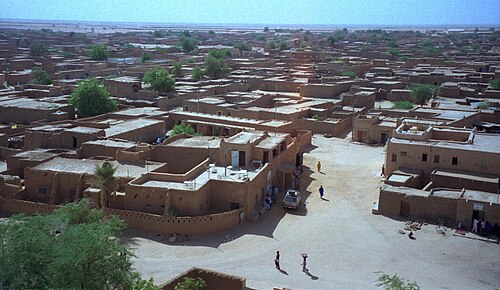
Agadez is a historic city located in the central part of Niger, serving as the capital of the Agadez Region. With a population of around 130,000 people, Agadez has long been a vital hub for trade, culture, and transportation in the Sahara Desert. The city is notable for its distinctive mud-brick architecture, particularly the Great Mosque of Agadez, built in the 16th century and recognized as a UNESCO World Heritage site. This structure, with its striking minaret, is a symbol of the city and reflects the rich Islamic heritage of the region. Agadez has a unique blend of Tuareg and Arab cultures, which is evident in its traditions, music, and festivals, making it a cultural melting pot in the heart of the Sahara.
Historically, Agadez served as a critical waypoint for trans-Saharan trade routes that connected sub-Saharan Africa with North Africa and Europe. It was particularly known for the trade of salt, gold, and various goods, contributing to its economic significance. The city has also been a center for the Tuareg people, a nomadic group known for their distinctive blue clothing, known as "the blue men of the Sahara." The local economy relies on trade, tourism, and pastoralism, with visitors drawn to its vibrant markets, scenic desert landscapes, and rich cultural heritage. Despite facing challenges such as climatic changes and security issues related to regional instability, Agadez continues to be a symbol of resilience and cultural identity in Niger.
In recent years, Agadez has found itself at the crossroads of significant migrations, as many seek passage through the region toward Europe. This has led to complex interactions between local populations and migrants, impacting the social dynamics of the city. The local government and NGOs have been exploring ways to manage these challenges while promoting sustainable development. Agadez, with its historical significance, cultural richness, and emerging role in contemporary migration narratives, remains a compelling focal point within the broader context of North West Africa.
Facts about Agadez
- Agadez is known as the gateway to the Sahara Desert, making it a significant hub for trade and commerce historically.
- The city is home to the iconic Agadez Mosque, which features a unique mud-brick architectural style and is a UNESCO World Heritage site.
- Agadez was historically an important center for the trans-Saharan trade routes, especially in the trade of salt and slaves.
- The city has a rich Tuareg culture, evident in its traditional music, festivals, and crafts, distinguishing it from many other urban areas in Niger.
- Agadez was the capital of the ancient Sultanate of Aïr, highlighting its historical significance in the region of Agadez.
- The region hosts the annual Agadez Festival in the Desert, which celebrates Tuareg music and culture, attracting visitors from around the world.
- Agadez is recognized for its vibrant local markets, where traditional artisans sell handmade crafts, textiles, and jewelry unique to the Tuareg culture.
- The surrounding landscape of Agadez features striking geological formations and unique desert ecosystems, attracting adventurers and nature enthusiasts.
- The city has served as a major stop for migrants traveling through Niger towards Europe, distinguishing its social and demographic makeup.
- Agadez's climate is characterized by extreme temperatures, with very little rainfall, setting it apart from other cities in Niger with more temperate climates.