Ahvaz, Iran
- 841,145 people
- 8 places to visit
- 31.3183, 48.6706
Places to Visit (8)
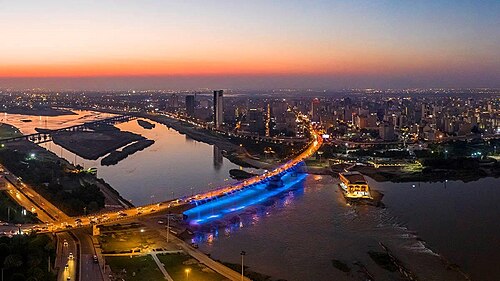
Ahvaz is a prominent city in southwestern Iran, serving as the capital of Khuzestan Province. Located on the banks of the Karun River, it holds the distinction of being one of Iran's most important urban centers due to its industrial, economic, and cultural significance. The city's history dates back to ancient times, with evidence of habitation suggesting it has been settled for thousands of years. Ahvaz played a vital role in the region through various historical periods, from the Achaemenid Empire to the Islamic era, while its strategic location contributed to its development as a commercial hub.
In contemporary times, Ahvaz is known for its diverse economy, heavily reliant on oil and gas industries, owing to its proximity to some of Iran's richest oil fields. The city also houses numerous manufacturing sectors and is a vital part of Iran's agricultural output, benefiting from the fertile land surrounding it. Despite its industrial growth, Ahvaz grapples with environmental challenges, particularly air pollution and water scarcity, which have drawn national and international attention. The city is home to a multicultural population, with Persian, Arab, and other ethnic communities coexisting, contributing to a rich cultural tapestry evident in local traditions, cuisine, and festivals.
Ahvaz's cultural landscape is further enriched by its historical sites and architecture, including remnants of ancient civilizations and modern structures. The city hosts various events celebrating its heritage, fostering a sense of identity among its residents. Additionally, Ahvaz is well-connected by road, rail, and air, facilitating travel and trade. While it faces challenges common to rapidly urbanizing regions, Ahvaz remains a vital city in Iran, illustrating the complexities of growth, cultural diversity, and industrialization.
Facts about Ahvaz
- Ahvaz is the capital of Khuzestan Province and is known for its significant oil industry, being one of the most important economic hubs in Iran.
- The city is situated on the banks of the Karun River, which is the only navigable river in Iran, offering a unique geographical feature compared to other cities.
- Ahvaz has a diverse population, including Arabs, Persians, Bakhtiaris, and Lors, reflecting a rich cultural heritage that differentiates it from many other Iranian cities.
- The city is home to the iconic White Bridge (Pol-e Sefid), a symbol of Ahvaz that showcases modern engineering and has become a popular landmark.
- Ahvaz experiences extremely high temperatures in the summer, making it one of the hottest cities in the world, which is a distinctive climate feature.
- The city has various historical sites, including the ruins of the ancient city of Susa nearby, which is a UNESCO World Heritage Site and highlights its historical significance.
- Ahvaz hosts the yearly Ahvaz International Festival of Traditional Music, which promotes local music and culture, distinguishing it as a cultural hub.
- The Ahvaz Waterfall is unique to the region, known for its recreational value, contrasting with many dry landscapes found throughout Iran.
- Ahvaz played a significant role during the Iran-Iraq War, serving as a critical area of conflict and a center for military operations, impacting its modern history.
- The city's local cuisine features distinct dishes influenced by Arab and Persian cultures, making the food scene in Ahvaz unique within Iran.