Al Ḩasakah, Syria
- 422,445 people
- 2 places to visit
- 36.51, 40.7413
Places to Visit (2)
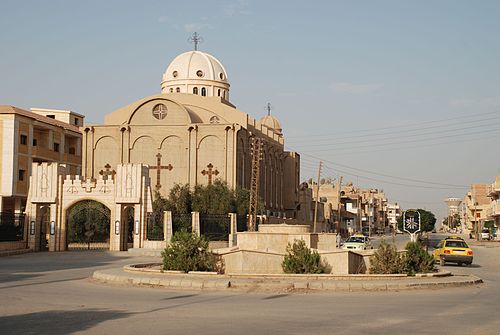
Al Ḩasakah is a city located in the northeastern part of Syria, serving as the administrative center of the Al-Hasakah Governorate. Positioned near the banks of the Khabur River, approximately 80 kilometers from the Turkish border, Al Ḩasakah plays a significant role in the region's agricultural and economic activities. The city has a diverse population, comprising various ethnic and religious groups, including Arabs, Kurds, Assyrians, and Armenians. This rich tapestry of cultures has influenced the city’s local customs, language, and cuisine, making it a unique melting pot within Syria.
Historically, Al Ḩasakah has been important for its agricultural productivity, particularly in the cultivation of grains and cotton. The surrounding land is fertile, benefiting from the river system that promotes irrigation. The city has also been a pivotal trade route connecting different parts of Syria and neighboring countries. However, since the outbreak of the Syrian Civil War in 2011, Al Ḩasakah's situation has become complicated. It witnessed a power struggle between various factions, including the Syrian government, Kurdish forces, and other militant groups. The city has remained a significant stronghold for the Syrian Democratic Forces (SDF), primarily composed of Kurdish fighters collaborating with the United States in efforts against the Islamic State group.
Despite the ongoing conflict, Al Ḩasakah has shown resilience in its governance and administration and has become a center for Kurdish self-administration. Although the war has brought numerous challenges, including displacement and economic difficulties, the local administration has focused on rebuilding the infrastructure and providing essential services to the residents. This emphasis on local governance has led to a unique political landscape, differentiated from other parts of war-torn Syria. The interplay of ethnic dynamics, coupled with the regional strategic interests of neighboring countries, continues to shape the future of Al Ḩasakah as it navigates through a complex socio-political environment.
Facts about Al Ḩasakah
- Al Ḩasakah is known for its rich agriculture, particularly its production of cotton, making it one of Syria's primary agricultural hubs.
- The city is strategically located near the confluence of the Khabur River, which is historically significant and has been a crucial water source for the region.
- Al Ḩasakah is home to a diverse population, including Kurds, Arabs, Assyrians, and Armenians, reflecting the ethnic and cultural richness of the region.
- The city has archaeological significance with nearby ancient sites, including Tell Brak and Tell Halaf, which date back to the Neolithic and Bronze Ages.
- Al Ḩasakah hosts the annual Yazidi pilgrimage to the nearby village of Ba'ashiqa, showcasing the region's religious and cultural diversity.
- The city played a significant role during the Syrian Civil War, emerging as a center for the Kurdish-led Autonomous Administration of North and East Syria.
- Al Ḩasakah has a unique system of local governance that differs from other parts of Syria due to its autonomous framework established by the Kurdish forces.
- The city features a range of historical architecture, including mosques and churches that represent its multicultural history.
- Al Ḩasakah is located close to the Syrian-Turkish border, influencing its socio-economic dynamics and trade relationships.
- The region around Al Ḩasakah is known for its oil reserves, making it a focal point in the energy sector within Syria.