Alba Iulia, Romania
- 66,085 people
- 15 places to visit
- 46.0733, 23.5805
Places to Visit (15)
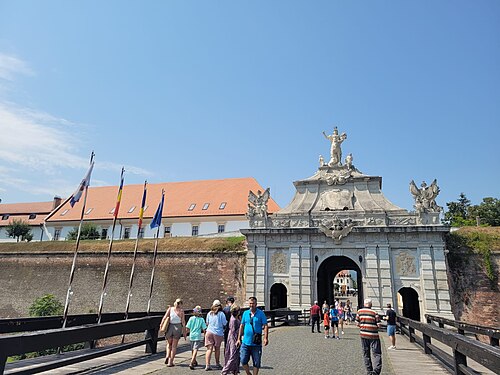
Alba Iulia is a historic city located in the Alba County of Romania, serving as its administrative capital. With a population of approximately 65,000 residents, it is situated in the heart of Transylvania, along the banks of the Mureș River. The city has a rich and diverse history, dating back to Roman times when it was known as Apulum, one of the most important Roman settlements in the region. The site played a crucial role during the Roman Empire, particularly as a military and economic center. Today, evidence of this ancient past can still be seen through the remnants of the Roman fortress and other archaeological findings that dot the landscape around the city.
One of the most significant landmarks in Alba Iulia is the Alba Carolina Citadel, a massive star-shaped fortress built between 1716 and 1736. This impressive structure was designed by the renowned architect Giovanni Morando Visconti and is notable for its well-preserved baroque architecture. The citadel not only serves as a historical monument but also as a venue for various cultural events and festivals, attracting both local visitors and tourists alike. Additionally, the city is of great importance in Romanian history as it was the site where the Union of Transylvania with Romania was proclaimed on December 1, 1918. This event is celebrated annually as Great Union Day, serving as a reminder of Alba Iulia's pivotal role in the formation of modern Romania.
In addition to its historical sites, Alba Iulia has become a center for education and culture in the region. The city boasts several universities and educational institutions, fostering a vibrant academic environment. Culture enthusiasts can enjoy numerous museums, including the National Museum of the Union, which showcases artifacts related to the unification of Romania, and other local exhibitions highlighting the region’s heritage. The city also hosts various events, from traditional fairs to music festivals, further enriching its cultural landscape. With its blend of rich history, architecture, and modern educational institutions, Alba Iulia stands as a significant cultural and historical symbol in Romania, continuing to attract those interested in exploring its storied past and vibrant present.
Facts about Alba Iulia
- Alba Iulia is known as the birthplace of the Romanian Unification, with the Great Union Assembly held here on December 1, 1918.
- The city is home to the Alba Carolina Fortress, a star-shaped fortress built in the 18th century, which is one of the largest and best-preserved citadels in Romania.
- Alba Iulia hosts the National Museum of Union, which contains artifacts and exhibits related to the history of the unification of Romania.
- The city has a unique and rich architectural heritage, featuring examples of Hungarian and Austro-Hungarian styles, which are less common in other Romanian cities.
- Alba Iulia is associated with the legend of Horia, Closca, and Crisan, who led a peasant revolt in 1784, symbolizing the fight for social justice.
- The city is characterized by its vibrant cultural scene, including the annual Alba Iulia History Festival, which celebrates the region's past with reenactments and activities.
- The Reunification Cathedral, built in 1921, is an iconic symbol of the city and is the largest Orthodox cathedral in Transylvania.
- Alba Iulia features a significant number of baroque buildings and squares, which create a picturesque and historical town center unique to the region.
- The city was historically a major military and administrative center, serving as the capital of Transylvania during the Habsburg rule.
- Alba Iulia is also known for its wine production, with vineyards in the surrounding areas, contributing to Romania's reputation as a wine-producing country.