Albi, France
- 52,409 people
- 16 places to visit
- 43.9249, 2.1487
Places to Visit (16)
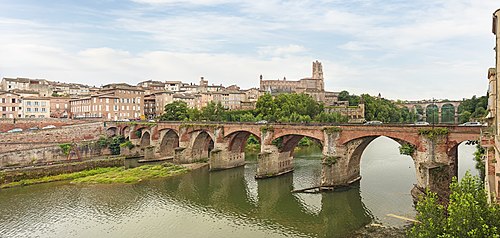
Albi is a historic city located in the Occitanie region of southern France, situated approximately 85 kilometers northeast of Toulouse. Renowned for its rich cultural heritage and stunning architecture, Albi has been recognized as a UNESCO World Heritage Site since 2010. The city is characterized by its reddish brick buildings, which reflect the local clay used in construction and give it a distinctive appearance. One of the most significant landmarks is the Sainte-Cécile Cathedral, the largest brick cathedral in the world, celebrated for its impressive Gothic design and intricate interior artwork. This architectural marvel dominates the skyline and serves as a symbol of the city’s historical importance, particularly in the context of the Albigensian Crusade, where it played a role in the long-standing conflict between Catholics and the Cathar movement.
The vibrant history of Albi is further reflected in the Palais de la Berbie, once the residence of the bishops of Albi, now houses the Toulouse-Lautrec Museum dedicated to the works of the famous painter Henri de Toulouse-Lautrec, who was born in the city in 1864. This museum, set within beautiful gardens, showcases an extensive collection of his paintings and drawings, providing insights into his unique artistic style and life. Beyond its artistic heritage, Albi features a picturesque medieval town center with narrow streets, charming squares, and traditional markets, appealing to both tourists and locals alike. The city is bordered by the Tarn River, offering scenic views and recreational opportunities, and serves as a gateway to the surrounding countryside, known for its vineyards and rolling hills.
Albi is well-connected by road and rail, making it easily accessible to visitors who wish to explore its rich history and culture. The city's annual events, such as the Albi Festival and various local fairs, celebrate its heritage and foster a sense of community. With a blend of historical significance, artistic heritage, and vibrant local life, Albi stands out as a captivating destination that embodies the charm of southern France.
Facts about Albi
- Albi is renowned for its stunning red-brick architecture, most notably the Sainte-Cécile Cathedral, which is one of the largest brick structures in the world.
- The city is the birthplace of the famous painter Henri de Toulouse-Lautrec, and his childhood home is now a museum dedicated to his work.
- Albi is classified as a UNESCO World Heritage site due to its historical significance and the beauty of its architecture and landscape.
- The Palais de la Berbie, located adjacent to the cathedral, was once a bishop's palace and is now home to the Toulouse-Lautrec Museum, showcasing an extensive collection of the artist's works.
- The Tarn River flows through Albi, providing picturesque views and opportunities for various water activities, distinguishing it from many other French cities that do not have significant rivers.
- Albi's historical center, with its medieval streets and vibrant squares, preserves a unique charm that attracts tourists looking for an authentic French experience.
- The city hosts the 'Albi en Fête' festival, celebrating local culture, gastronomy, and music, offering a unique insight into the region's traditions.
- Albi is the historical heart of the Cathar movement, and remnants of this heritage can be seen in the architecture and history of the area.
- The city's red brick color comes from the local clay and is a defining characteristic of its aesthetic, setting it apart from other French cities that feature stone or white facades.
- The annual Grand Prix of Albi is a popular motor racing event, attracting car enthusiasts from all over the country and further distinguishing the city in the realm of sports.