Alessandria, Italy
- 92,104 people
- 16 places to visit
- 44.9073, 8.6117
Places to Visit (16)
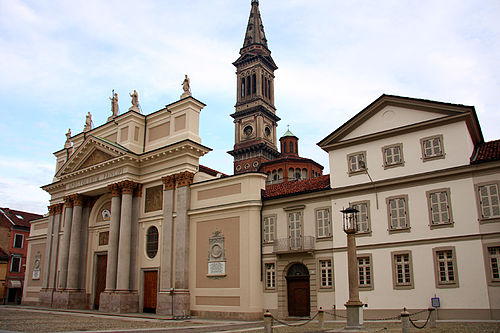
Alessandria, a city in northwestern Italy, serves as the capital of the Province of Alessandria in the Piedmont region. Founded by the Romans in 1155 as a defensive outpost for Milan, the city was named after Pope Alexander III, who supported its creation. The city’s strategic location on the confluence of the Tanaro and Bormida rivers makes it a vital transportation hub, historically connecting the regions of Piedmont, Liguria, and Lombardy. Alessandria played a significant role during various historical periods, especially in the 18th and 19th centuries, as it became a stronghold for the French and later the Austrians during their conflicts in Italy. The city was a prominent site in the Italian War of Independence, with the Battle of Alessandria in 1849 marking a critical moment in Italy’s unification efforts.
Architecturally, Alessandria reflects a blend of styles influenced by its diverse historical context. Notable landmarks include the Citadel, a star-shaped fortress built in the 18th century, which symbolizes the city's military significance. The Cathedral of San Pietro and the Basilica of Santa Maria di Castello highlight the city's ecclesiastical heritage, while the Palazzo Comunale and Teatro Comunale provide insight into the civic and cultural life of Alessandria. Today, the city has evolved into a commercial center known for its production of wine and agricultural products, particularly in the surrounding Monferrato region. Alessandria also hosts vibrant markets and festivals, contributing to its cultural identity and maintaining the traditions of the Piedmontese folklore.
In addition to its historical and architectural attractions, Alessandria possesses a rich culinary scene, with local specialties including agnolotti, a type of stuffed pasta, and the renowned Barbera and Dolcetto wines, which are enjoyed both locally and internationally. The city's population, which stands at around 90,000, engages in various sectors, ranging from agriculture to manufacturing, showcasing its adaptability to modern economic trends. Alessandria continues to be a city that bridges its illustrious past and contemporary life, providing an engaging experience for both residents and visitors who wish to explore the unique character of this Italian gem.
Facts about Alessandria
- Alessandria was founded in 1168 and named after Pope Alexander III, who supported its independence from the Holy Roman Empire.
- The city is famous for its Ferrero Rocher chocolates, as the Ferrero company, founded in 1946, is headquartered nearby.
- Alessandria is home to the Citadel of Alessandria, an impressive star-shaped fortress built in the 18th century, showcasing military architecture of the period.
- The city played a significant role during the Napoleonic Wars and served as a strategic military base, leading to the construction of new fortifications.
- Alessandria is known for its unique rich historical blend of Baroque and Neo-Classical architecture, reflected in its numerous churches and public buildings.
- The city hosts the annual 'Palio di Alessandria', a historical horse race that revives traditions dating back to the medieval period.
- Alessandria has a vibrant textile industry, historically significant for its production of silk, which played an important role in the local economy.
- The city was a hub for resistance during World War II, with many clandestine activities against occupying forces taking place here.
- Alessandria features several significant squares, including Piazza della Libertà, which hosts important civic buildings and is a central meeting point.
- The Diocese of Alessandria is notable for its rich heritage and the historic Cathedral of St. Peter, a prime example of local ecclesiastical architecture.