Algiers, Algeria
- 2,364,230 people
- 16 places to visit
- 36.7538, 3.0588
Places to Visit (16)
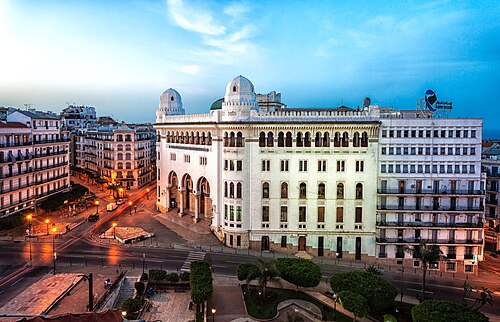
Algiers, the capital city of Algeria, is situated on the Mediterranean coast and serves as the country’s political, economic, and cultural center. Known as "El Djazair" in Arabic, which means "the islands," the city is characterized by its stunning coastal landscape and is nestled between the Mediterranean Sea and the Atlas Mountains. Algiers reflects a rich historical tapestry, influenced by various civilizations including the Phoenicians, Romans, Ottomans, and French, each of which has left an indelible mark on the city's architecture, culture, and social fabric. The city is home to a range of noteworthy landmarks, such as the imposing Kasbah, a UNESCO World Heritage Site featuring narrow alleys, ancient mosques, and traditional houses adorned with wrought iron balconies.
Modern Algiers is a bustling metropolis with a population of over 3 million people. It combines contemporary urban development with historical charm. The city features a mixture of colonial-era buildings and modern skyscrapers, demonstrating a blend of architectural styles. The notable Avenue de la Révolution, lined with palm trees, serves as a central thoroughfare, and the Aqueduct of El Madjar, a remnant of Roman engineering, adds to the city’s historical allure. Algiers also hosts several museums and cultural institutions, such as the National Museum of Fine Arts and the Bardo Museum, showcasing artifacts from Algeria's long history. The city's vibrant markets, known as souks, offer a glimpse into daily life and allow visitors to experience Algerian culture through traditional crafts, spices, and local cuisine, including famed dishes like couscous and tajine.
Economically, Algiers plays a crucial role in Algeria’s oil and gas sector, which is the backbone of the national economy. The city's port facilitates trade and commerce, while the presence of various national and international corporations fosters a growing service sector. Additionally, Algiers is a hub for education, with several universities and academic institutions contributing to the country's development. Despite facing challenges such as urbanization and youth unemployment, Algiers continues to project an image of resilience and dynamism, positioning itself as not just a central city in Algeria, but also a significant player in North Africa and the Mediterranean region. Its unique blend of history, culture, and modernity makes Algiers an intriguing destination for both travelers and scholars alike.
Facts about Algiers
- Algiers is known as 'El Djazair' in Arabic, which translates to 'The Islands' due to the several islands that once existed off its coast.
- The city features an iconic casbah, a UNESCO World Heritage site, characterized by its narrow winding streets and traditional whitewashed buildings.
- Algiers served as the capital of the Ottoman rule in North Africa for over three centuries, influencing its architecture and culture.
- The Martyrs' Memorial in Algiers commemorates the sacrifices made during the Algerian War of Independence and stands as a symbol of national pride.
- Algiers is home to the National Museum of Fine Arts, which houses an impressive collection of artworks, including pieces from the Ottoman period and modern Algerian art.
- The city boasts a Mediterranean climate, making it one of the warmest cities in the country, with hot, dry summers and mild, wet winters.
- Algiers is known for its vibrant street art scene, with numerous murals and graffiti art scattered throughout the city, reflecting contemporary social and political themes.
- The Royal Palace of Algiers, or the 'Palais des Raïs,' is a historically significant landmark that once served as the residence of the Dey of Algiers.
- The city is the birthplace of several influential figures in modern Algeria, including the revolutionary leader Ahmed Ben Bella, the first president of Algeria after independence.
- Algiers has a rich maritime history as a bustling port city, playing a crucial role in Mediterranean trade routes and pirate activities during the 17th and 18th centuries.