Alice Springs, Australia
- 25,186 people
- 14 places to visit
- -23.6981, 133.8807
Places to Visit (14)
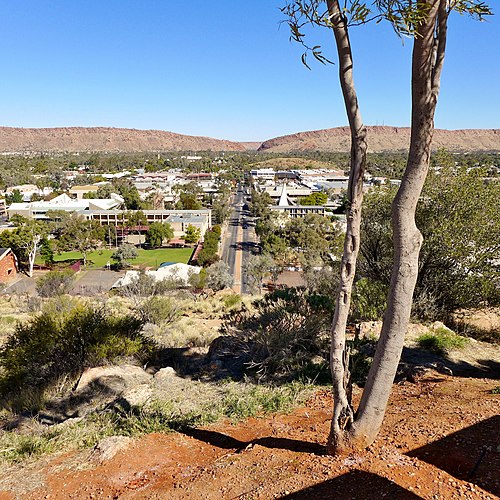
Alice Springs is a town located in the Northern Territory of Australia, positioned roughly in the geographic center of the country. Known for its red desert landscapes, Alice Springs is a key service and logistics hub for the surrounding region, home to approximately 25,000 residents. The town sits along the Todd River, which is usually dry except during periods of heavy rain. Established in the late 19th century, Alice Springs was originally a telegraph station built in 1872, aimed at facilitating communication with the more populated southern regions. The name "Alice Springs" is derived from the nearby waterhole named after Alice, the daughter of Sir Charles Todd, the Superintendent of Telegraphs.
The town serves as a gateway to various iconic attractions, including Uluru (Ayers Rock) and the MacDonnell Ranges. Alice Springs has a rich Aboriginal heritage, with the Arrernte people being the traditional custodians of the land. Cultural experiences in the area often highlight Indigenous history, art, and traditions. The town is also home to several significant institutions, including the Alice Springs Desert Park, which educates visitors about the desert environment and its wildlife, and the Alice Springs School of the Air, a unique educational institution that serves remote families across the vast outback through radio and online classes. Events such as the annual Alice Springs Beanie Festival and the Finke Desert Race attract tourists and showcase the local community's creativity and resilience.
Economically, Alice Springs relies on tourism, agriculture, and public services, benefiting from its strategic location as a transport hub for both goods and people traversing the vast central Australian desert. Despite its remote location, the town offers a range of services and amenities, including schools, healthcare facilities, and shopping centers, making it an essential base for visitors exploring the Australian outback. With its unique blend of natural beauty, cultural significance, and community spirit, Alice Springs remains a vital and distinctive part of Australia's diverse landscape.
Facts about Alice Springs
- Alice Springs, often referred to as 'Alice', is known as the 'Red Centre' of Australia and serves as a gateway to the iconic Uluru (Ayers Rock) and other Indigenous cultural sites.
- The town was originally established as a telegraph station in 1871, aiming to connect Australia to the rest of the world, which makes it one of the key historical sites in the central Australian desert.
- Alice Springs is home to the famous annual Alice Springs Desert Festival, which showcases the art, culture, and music of the region, blending indigenous and contemporary influences.
- The Alice Springs Reptile Centre is one of the largest reptile exhibitions in Australia, featuring a wide range of local reptiles, including the perentie and thorny devil.
- Located in the Northern Territory, Alice Springs is uniquely characterized by its extreme climate, with significant temperature variations between day and night, typical of desert environments.
- The region around Alice Springs holds a rich Aboriginal heritage, with various art galleries, such as the Araluen Cultural Precinct, dedicated to showcasing Indigenous art and culture.
- The annual Henley-on-Todd Regatta, held in Alice Springs, features a unique dry riverboat race, which is one of the only events of its kind in Australia, and draws tourists and locals alike.
- Alice Springs has one of the highest concentrations of Aboriginal Australians in urban areas, which contributes to its vibrant cultural scene and community events.
- The city's name comes from Alice, the wife of a British telegraph engineer, and 'Springs' refers to the natural water springs that were crucial for the establishment of the telegraph station.
- The Alice Springs Telegraph Station is a well-preserved historical site, providing insights into early European settlement and its role in Australia's communication network.