Altamura, Italy
- 70,539 people
- 11 places to visit
- 40.8243, 16.5526
Places to Visit (11)
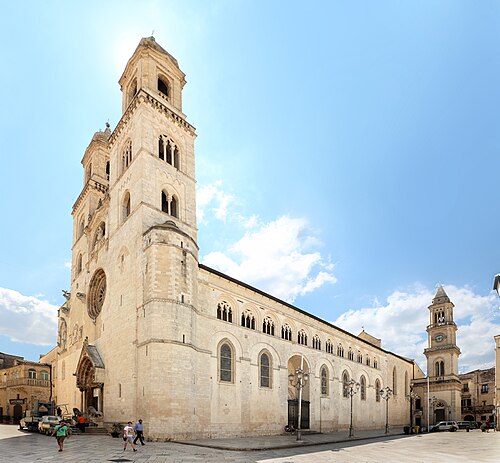
Altamura, a historic city located in the Apulia region of southern Italy, is known for its rich cultural heritage, archaeological significance, and traditional bread-making. Nestled in the Murge plateau, approximately 45 kilometers southwest of Bari, Altamura boasts an impressive blend of historical architecture, including ancient churches, charming piazzas, and well-preserved medieval structures. Its strategic position along ancient trade routes contributed to its development, leading to a confluence of diverse influences that shaped its identity over the centuries. The city's name is believed to derive from the Arab word "al-tamura," which means "the land of the cultivated fields."
One of the unique aspects of Altamura is its famous bread, Pane di Altamura, which has been granted Protected Designation of Origin (PDO) status. This artisanal bread is made from locally sourced durum wheat and is characterized by its crunchy crust and soft, porous interior. The traditional baking methods have been passed down through generations, with bakers continuing to use wood-fired ovens that enhance the bread's distinctive flavor. Additionally, Altamura is home to significant archaeological sites, such as the Grotta di San Michele, a prehistoric cave that has yielded important Paleolithic remains. The city also features the Altamura Man, a well-preserved Neanderthal skeleton discovered in the nearby cave of Lamalunga, which has provided valuable insights into human evolution.
Altamura's vibrant community thrives around its cultural festivals, including the Feast of St. Equizio and the traditional Holy Week celebrations, which draw visitors and locals alike. These events reflect the city's deep-rooted religious traditions and communal spirit. Furthermore, the surrounding countryside offers breathtaking landscapes, with rolling hills, olive groves, and vineyards, making Altamura an appealing destination for ecotourism and culinary exploration. Overall, Altamura is a city that encapsulates the essence of Apulia, combining historical significance, exceptional gastronomy, and authentic Italian culture.
Facts about Altamura
- Altamura is renowned for its unique bread, Pane di Altamura, which has been granted PGI (Protected Geographical Indication) status due to its traditional production methods.
- The city is home to the impressive Romanesque cathedral, Cattedrale di Altamura, which features a rich history dating back to the 13th century and showcases stunning architectural details.
- Altamura has a notable prehistoric site, the Altamura Man, whose fossilized remains were discovered in the 1990s and are believed to be over 100,000 years old.
- The town is part of the Murge plateau, giving it a unique geological and natural environment, characterized by limestone formations and rich biodiversity.
- Altamura is famous for its ancient stone walls and well-preserved historic center that reflects a blend of Norman, Swabian, and Byzantine influences in its architecture.
- It hosts traditional festivals such as the 'Festa di San Nicola' in December, which features a vibrant procession and various cultural events.
- The Altamura dialect, a variant of the Apulian dialect, retains many archaic elements, distinguishing it from other regional languages in Italy.
- The city was once an important center during the Swabian period under Frederick II of Hohenstaufen in the 13th century, who contributed to its development.
- Altamura's rich agricultural land is known for producing high-quality olive oil and wine, particularly from the nearby Murgia region.
- The city was designated a Città d'Arte (City of Art) due to its significant artistic and cultural heritage, attracting visitors interested in history and art.