Ambilobe, Madagascar
- 66,029 people
- 1 places to visit
- -13.2026, 49.0514
Places to Visit (1)
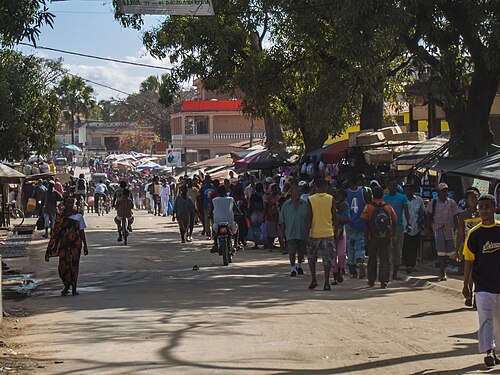
Ambilobe is a vibrant city located in the northern region of Madagascar, serving as the capital of the Ambilobe District in the Diana Region. Positioned along the banks of the Mahavavy River and bordered by lush agricultural land, Ambilobe has a population of approximately 30,000 residents. The city's economy primarily revolves around agriculture, with the fertile soil supporting the cultivation of various crops, including sugarcane, coffee, and vanilla, which are essential to the local and national economy. Additionally, Ambilobe is a hub for the regional timber industry, and its proximity to natural resources has enabled it to develop a modest commercial sector.
The city is known for its cultural diversity and unique historical significance. Ambilobe has a rich Malagasy culture, and the city’s architecture reflects a blend of indigenous and colonial influences. Local markets buzz with activity, featuring traditional crafts and handicrafts that showcase the artisanship of the people. The surrounding region is home to several notable natural attractions, including the nearby Ankarana Reserve, famous for its impressive limestone formations, underground rivers, and diverse wildlife. Moreover, the proximity of Ambilobe to the ocean provides access to beautiful beaches and opportunities for fishing, further contributing to the livelihoods of local communities. While Ambilobe faces challenges common in developing regions, including infrastructure deficits and social issues, its strategic location, natural resources, and cultural vibrancy position it as an essential player in Madagascar’s ongoing development.
Facts about Ambilobe
- Ambilobe is known for its rich agricultural heritage, particularly in the cultivation of sugarcane and vanilla, making it a significant contributor to Madagascar's economy.
- The city is located near the famous Amber Mountain National Park, which is renowned for its biodiversity, including endemic species of plants and animals.
- Ambilobe is the historical capital of the Sakalava kingdom, which played a major role in the history of Madagascar during the 17th to 19th centuries.
- The town hosts the Ambilobe Market, one of the largest and most vibrant markets in Madagascar, where locals trade a variety of goods, including handicrafts and fresh produce.
- Ambilobe has a unique geological feature known as the Mahajanga basin, which is characterized by ancient limestone formations and intricate cave systems.
- The city is a hub for traditional Malagasy crafts, particularly weaving and pottery, which reflect the rich cultural heritage of the region.
- Ambilobe is situated along the Route Nationale 6, which connects the northern and southern regions of Madagascar, making it an important transit point for trade.
- The area is known for the annual 'Fête de la Vanille', which celebrates the local vanilla production and attracts visitors to experience the culture and gastronomy of the region.
- Ambilobe serves as a gateway to the northern coast of Madagascar, providing access to beautiful beaches and snorkeling spots that are less crowded than more touristy areas.
- The city has a diverse population that includes several ethnic groups, contributing to a mosaic of languages, traditions, and culinary practices unique to the northern region of Madagascar.