Ancona, Italy
- 89,994 people
- 16 places to visit
- 43.6071, 13.5102
Places to Visit (16)
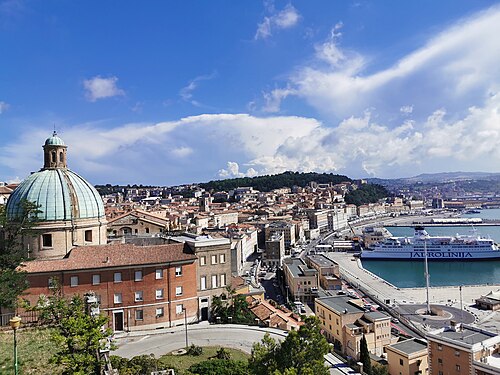
Ancona is a historic port city located on the Adriatic coast of Italy, serving as the capital of the Marche region. With a population of approximately 100,000 residents, Ancona is an important economic and cultural center in the region. The city has a rich history that dates back to ancient times, originally founded by the Greeks in the 4th century BC, and later a significant Roman outpost. Ancona’s strategic position as a maritime hub has played a vital role in its development, making it a focal point for trade and transportation throughout the centuries. The scenic landscape surrounding the city features hills that rise abruptly from the sea, offering picturesque views of the coastline.
Culturally, Ancona is known for its architectural heritage, with several notable landmarks that reflect its storied past. One of the most prominent structures is the Cathedral of San Ciriaco, a Romanesque-Gothic church constructed in the 11th century, perched on top of Guasco Hill. The church is famous for its stunning facade and panoramic views of the city and the Adriatic Sea. The old town, characterized by narrow streets and historical buildings, is home to the Arch of Trajan, an impressive ancient monument honoring the Roman emperor. Ancona also serves as a gateway to various destinations in the Marche region, famous for its rolling hills, vineyards, and beautiful countryside. The city hosts numerous cultural events throughout the year, including music festivals and historical reenactments, which showcase its vibrant community spirit.
Economically, Ancona thrives on its port activities, being one of the main harbors in Italy, facilitating maritime trade and passenger ferries to Croatia and other destinations across the Adriatic. The economy is further supported by agriculture and manufacturing, with local industries producing textiles, machinery, and food products, particularly seafood. The city also benefits from tourism, attracting visitors eager to explore its historical sites and enjoy the regional gastronomy, characterized by fresh seafood and traditional Marche cuisine. Ancona's blend of history, culture, and economic activity makes it a compelling destination that encapsulates the essence of Italy's Adriatic coast.
Facts about Ancona
- Ancona is the capital of the Marche region and has a unique coastal position on the Adriatic Sea, making it one of Italy's major ports.
- The city's name is derived from the Greek word 'ankon', meaning 'elbow', due to its picturesque shape along the coastline.
- Ancona is home to the Arch of Trajan, a stunning Roman monument that dates back to the early 2nd century AD and is one of the best-preserved arches in Italy.
- The Cathedral of San Ciriaco, an example of Romanesque architecture, is famous for its stunning location on Guasco Hill, offering panoramic views of the city and sea.
- Ancona played a significant role during World War II, being a key Allied landing site during the Italian campaign, particularly during the Ancona offensive.
- Every year, Ancona hosts the 'Taradonti' festival, celebrating traditional cuisine and local maritime culture, highlighting the city's rich culinary heritage.
- The city boasts a unique blend of medieval and modern architecture, exemplified by the Venetian-style buildings in the Passetto area, unlike many other Italian cities.
- Ancona has an important maritime tradition and is known for its shipbuilding industry, contributing significantly to the local economy.
- The city is also famous for its local wine, Verdicchio, which is produced in the surrounding hills and known for its unique flavor derived from the local terroir.
- Ancona is the eastern terminus of the famous pilgrim route Via Lauretana, leading to the Basilica della Santa Casa in Loreto, attracting pilgrims from all over Europe.