Anqing, China
- 804,493 people
- 6 places to visit
- 30.5429, 117.0635
Places to Visit (6)
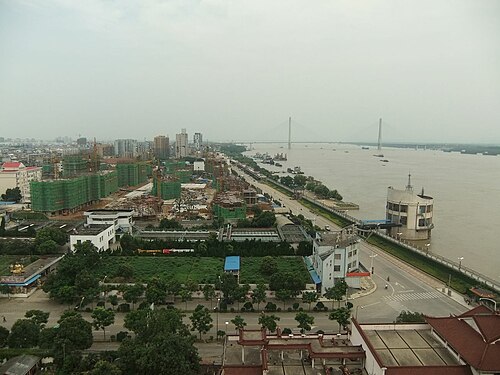
Anqing is a city located in the southwestern part of Anhui Province in China, situated on the banks of the Yangtze River. It serves as the administrative center of Anqing Prefecture and has a population of approximately 1.3 million people. The city has a rich historical background, with roots dating back over 2,000 years. Anqing was once known as the capital of the southern Anhui region and played a significant role in various historical events, particularly during the tumultuous times of the Taiping Rebellion in the 19th century. The city's modern development is bolstered by its strategic location, with road and rail connections enhancing its accessibility and economic potential.
Anqing is renowned for its beautiful natural scenery and cultural heritage. The surrounding landscape features picturesque mountains, rivers, and lakes, making it an attractive destination for tourists. Notable attractions include the Anqing Ancient City, with well-preserved traditional architecture, and the nearby Qianshan National Park, known for its stunning views and hiking trails. The city is also famous for its particularly refined local cuisine, with dishes that highlight its agricultural products. Anqing's climate, characterized by a humid subtropical environment, further supports a diverse range of flora and fauna, thereby enhancing its appeal as a natural paradise. Additionally, Anqing is recognized for its contributions to Wu opera, a traditional form of Chinese theater, helping preserve an important aspect of the region's cultural identity.
In terms of economy, Anqing has developed a diverse industrial base, including textiles, machinery, and pharmaceuticals. The government has been actively promoting economic development, which has led to investments in infrastructure and technology. As a transportation hub, Anqing continues to expand its influence in trade and commerce, facilitating both regional and international exchanges. With a blend of historical significance, cultural richness, and economic drive, Anqing stands as a vibrant city reflecting both the heritage and the aspirations of modern China.
Facts about Anqing
- Anqing is known for being one of the birthplaces of the Chinese revolution, with significant events related to the uprising occurring in the region during the early 20th century.
- The city boasts the famous Anqing Tea, which is recognized for its unique flavor and quality, contributing to China's rich tea culture.
- Anqing is home to the historic Huaining County, known for its ancient architecture and connections to the renowned poet Li Bai, who is celebrated for his contributions to Chinese literature.
- The city features the Anqing Old Street, a perfectly preserved historical area showcasing traditional southern Chinese architecture and local craftsmanship.
- Anqing is situated on the banks of the Yangtze River, making it a crucial transportation hub in the region and an important site for trade and commerce in southern China.
- Anqing's picturesque landscapes are characterized by the famous Huangshan Mountain, which has inspired poets and artists throughout Chinese history.
- The city is known for its unique local cuisine, particularly the delicious Anqing-style fish dishes, which are celebrated for their emphasis on fresh, local ingredients.
- Anqing has rich cultural heritage, with numerous cultural festivals throughout the year, including the Anqing Puppet Festival, which showcases traditional shadow puppetry.
- The city also houses the Anqing Museum, which provides insights into the region's history, culture, and arts, making it a valuable educational resource for visitors.
- Anqing is recognized as a center for the production of bamboo products, and it hosts an annual Bamboo Cultural Festival that attracts artisans and visitors from across the country.