Antananarivo, Madagascar
- 1,349,501 people
- 7 places to visit
- -18.9185, 47.5211
Places to Visit (7)
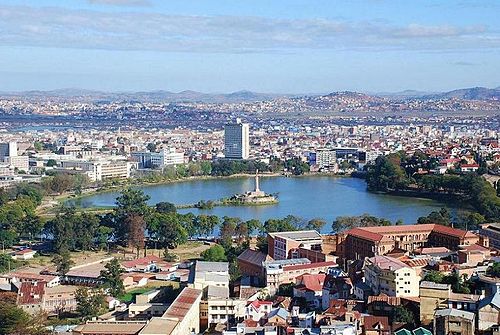
Antananarivo, often referred to as Tana, is the capital and largest city of Madagascar, located in the central highlands of the island nation. At an altitude of approximately 1,280 meters (4,199 feet), it offers a unique landscape characterized by rolling hills, rice paddies, and a diverse array of flora and fauna. The city has a population of over 1.3 million people, making it a vibrant cultural and economic hub. Established in the early 17th century, Antananarivo served as a royal city and has evolved significantly over the years. It features a mix of colonial architecture, traditional Malagasy structures, and modern developments, reflecting its rich history and dynamic growth.
Antananarivo is not only the political center of Madagascar but also the heart of its commerce, education, and culture. The city is home to several key institutions, including the University of Antananarivo, which provides higher education in various fields. The economy of Antananarivo is diverse, with sectors such as agriculture, textiles, and tourism playing significant roles. Notable attractions include the Rova of Antananarivo, a historic royal palace complex, and the Analakely market, where locals shop for handicrafts, spices, and fresh produce. Moreover, the city’s unique neighborhoods, such as Isoraka and Antanimena, are known for their vibrant street life and local cuisine, offering visitors a rich experience of Malagasy culture.
Transportation in Antananarivo is a mix of traditional and modern systems, with buses, taxi-brousse (shared taxis), and rickshaws serving as common modes of transport. The city has faced challenges, such as urban congestion and infrastructure development due to rapid population growth. However, it continues to adapt with various urban planning initiatives aimed at improving living conditions and accessibility. Despite these challenges, Antananarivo remains a crucial point for travelers seeking to explore Madagascar’s diverse ecosystems and wildlife. Its combination of history, culture, and modernity makes it a fascinating destination in the Indian Ocean region.
Facts about Antananarivo
- Antananarivo, often referred to as Tana, is the capital and largest city of Madagascar, situated at an elevation of around 1,280 meters (4,199 feet).
- The city was founded in the early 17th century and served as the capital of the Merina Kingdom, playing a crucial role in Madagascar's unification.
- Antananarivo is known for its unique architecture, which blends traditional Malagasy styles and influences from French colonial design.
- The Rova of Antananarivo, a royal palace complex, is an iconic historical site that was once the residence of the Merina kings and queens.
- The city's name translates to 'city of a thousand' in Malagasy, referring to the numerous hills and dense population in the area.
- Antananarivo is home to significant educational institutions, including the University of Antananarivo, which is one of the oldest and largest universities in the country.
- The city's market, Analakely, is one of the largest in Madagascar, offering a vibrant atmosphere filled with local crafts, foods, and traditional Malagasy products.
- Antananarivo has a unique climate, with a subtropical highland climate characterized by cool temperatures and distinct wet and dry seasons.
- A prominent feature of the city is the Avenue de l'Indépendance, a busy thoroughfare that serves as a central point for transport and commerce.
- Antananarivo hosts the annual Festival of the City, a celebration showcasing the culture and heritage of Madagascar through music, dance, and arts.