Antofagasta, Chile
- 352,638 people
- 12 places to visit
- -23.6509, -70.3975
Places to Visit (12)
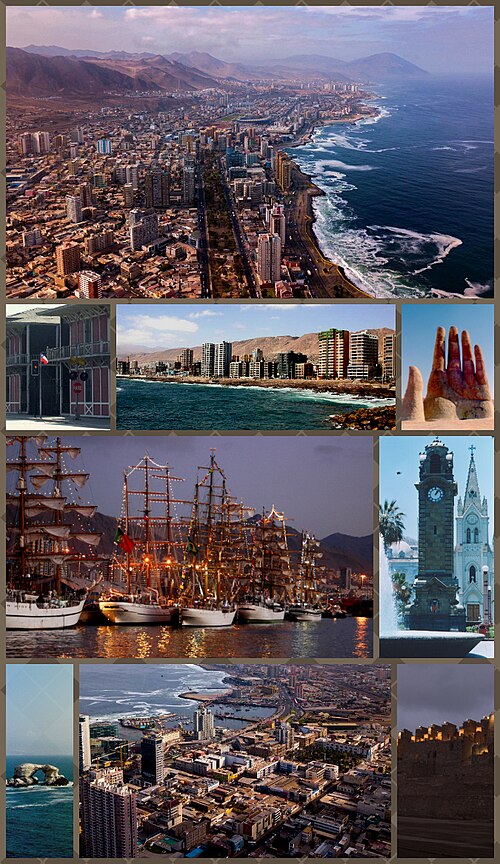
Antofagasta is a coastal city situated in northern Chile, serving as the capital of the Antofagasta Region. Founded in 1868, it has evolved into one of the country’s most significant urban centers, heavily tied to the economic activities surrounding mining, particularly copper extraction. The city’s location along the Pacific coast, approximately 1,100 kilometers north of Santiago, places it strategically for trade and industry. With a population of around 400,000 residents, Antofagasta is characterized by its desert climate, predominantly influenced by the Atacama Desert, which is one of the driest places on Earth.
The economy of Antofagasta is primarily driven by the mining sector, which flourished due to the rich mineral resources in the region. It is home to several major mining companies and facilities, contributing significantly to both local and national economies. The port of Antofagasta is crucial for the export of copper and other minerals, facilitating global trade. Aside from mining, the city also has burgeoning sectors such as tourism, commerce, and services. The city offers various attractions, including historical sites, cultural events, and beautiful coastal scenery, making it an emerging destination for domestic and international tourists.
Antofagasta also faces challenges, such as water scarcity due to its arid climate and issues related to urbanization and infrastructure development. Nonetheless, the city has made strides in improving its public services and urban planning. In recent years, Antofagasta has undergone significant transformations, with investments in transportation, education, and technology sectors aimed at enhancing the quality of life for its residents. The city's unique blend of natural beauty, economic significance, and cultural richness makes Antofagasta a vital player in Chile’s development narrative and a city of increasing importance in the South American landscape.
Facts about Antofagasta
- Antofagasta is the largest city in northern Chile and serves as an important regional center for mining and maritime activities.
- The city has a unique desert climate, categorized as a semi-arid climate, with very little rainfall averaging around 2-5 mm annually.
- Antofagasta is home to the historic La Portada, a natural rock formation and one of the most photographed landmarks in Chile, resembling a natural arch.
- The city was founded in 1868 and rapidly developed during the saltpeter boom in the late 19th century, significantly influencing Chile's economy.
- Antofagasta hosts the annual Festival of the Sea ('Fiesta del Mar'), celebrating the city's rich maritime culture and heritage.
- It is home to the Universidad de Antofagasta, which is known for its focus on engineering and mining programs, reflecting the region's industrial activities.
- Antofagasta has one of the highest concentrations of mining activity in the world, particularly copper mining, which plays a crucial role in Chile's economy.
- The city has a rich cultural scene, with landmarks such as the Antofagasta Cultural Center and the historic Teatro Municipal, which offers various artistic performances.
- Antofagasta is strategically located along the Pacific coast, making it a significant port city for trade and export in Chile.
- The city was the site of important events in Chile's history, including the War of the Pacific in the late 19th century, which altered the territorial boundaries of the region.