Antsirabe, Madagascar
- 260,907 people
- 1 places to visit
- -19.873, 47.0291
Places to Visit (1)
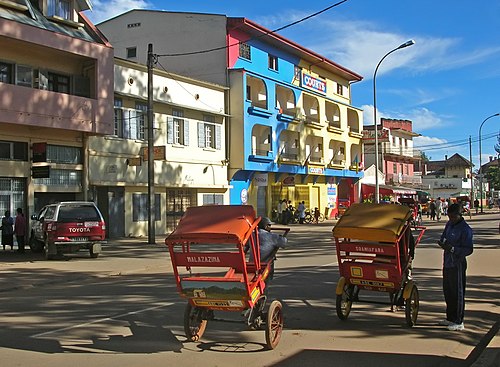
Antsirabe, located in the central highlands of Madagascar, is the third-largest city in the country and serves as a significant cultural and economic hub. Founded in 1872 by Norwegian missionaries, its name translates to “water” in Malagasy, a reference to the numerous thermal springs in the area. Antsirabe is situated approximately 170 kilometers south of the capital city, Antananarivo, and lies at an elevation of around 1,500 meters, giving it a temperate climate characterized by mild temperatures and annual rainfall averaging 1,500 mm. The city is known for its colonial architecture, vibrant markets, and artisanal craftsmanship, contributing to its appeal as a tourism destination.
The economy of Antsirabe revolves around agriculture, commerce, and handicrafts. The fertile surrounding landscape is conducive to the cultivation of crops such as rice, vegetables, and flowers, while the region is also renowned for its gem and mineral trades. Handicrafts, particularly those made from precious stones and wood, are significant contributors to the local economy. Antsirabe is also famous for its "pousse-pousse," a rickshaw-like mode of transport, symbolizing the city's blend of traditional and modern influences. The city serves as a crucial transit point for travelers exploring the highlands and the southern regions of Madagascar, with many visiting local attractions such as Lake Tritriva and the nearby volcanic lakes.
Culturally, Antsirabe is rich in Malagasy traditions and is home to various ethnic groups, primarily the Merina and the Betsileo. This diversity is reflected in the city's festivals, music, and cuisine, creating a vibrant cultural tapestry. The city hosts several events throughout the year that celebrate local customs and crafts, attracting both residents and visitors alike. Additionally, Antsirabe is an educational center, housing several institutions of higher learning and vocational training schools. As a result, it plays a pivotal role in shaping the educational landscape of Madagascar, fostering opportunities for the local population. Overall, Antsirabe stands out as a picturesque city that balances historical charm with modern development, making it a unique and integral part of Madagascar's cultural heritage.
Facts about Antsirabe
- Antsirabe is known as the 'City of Water' due to its numerous thermal springs and hot water sources.
- It was founded in 1856 by Norwegian missionaries, making it one of the first towns established by foreigners in Madagascar.
- The city is famous for its vibrant pousse-pousse (rickshaw) culture, with these decorated cycles being a popular mode of transportation.
- Antsirabe has a unique presence of artisans and craftspeople, particularly known for producing high-quality gemstone and raffia products.
- The city serves as the administrative and economic center of the Vakinankaratra Region, playing a vital role in regional trade and agriculture.
- Antsirabe hosts several cultural events, including the annual 'Fête de la Musique' which celebrates local music and artistry.
- The Avenue of Independence, lined with colonial architecture, showcases the historical significance of French rule in Madagascar.
- Antsirabe is also home to the famous 'La ville aux cent mille habitants' (The City of One Hundred Thousand Inhabitants), referring to its urban growth under different administrations.
- The city lies at an elevation of 1,500 meters (4,900 feet), resulting in a cooler climate compared to other cities in Madagascar.
- Antsirabe is known for its unique ecosystem, housing rare Madagascar flora and fauna, educational institutions like the National Institute of Arts and other research facilities.