Anyang, China
- 1,146,839 people
- 7 places to visit
- 36.0975, 114.3931
Places to Visit (7)
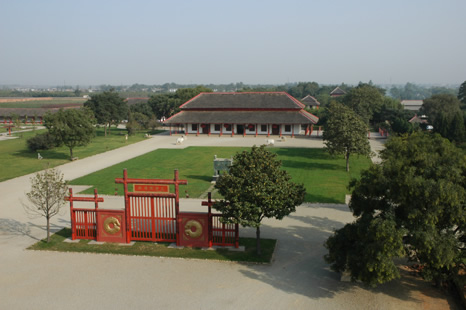
Anyang is a city located in the Henan province of China, situated in the central part of the country. It is historically significant and has been a center of culture and governance since ancient times. The city is best known as the location of the ancient city of Yin, which served as the capital of the Shang Dynasty, one of China's earliest civilizations, around 1600 to 1046 BC. Today, Anyang is recognized for its rich archaeological heritage, with the nearby ruins of Yin being designated a UNESCO World Heritage Site in 2006. These ruins include the remnants of royal tombs and oracle bone inscriptions, which are crucial for understanding early Chinese writing and history.
Modern Anyang has developed into an important industrial and economic hub in Henan province. With a population exceeding 5 million, it is characterized by a blend of traditional and contemporary influences. The city's economy is diverse, involving industries such as machinery manufacturing, textiles, pharmaceuticals, and food processing. Anyang also has a robust transportation network, including railways and highways, which facilitates trade and mobility. Additionally, the city has made significant investments in education and technology, with several universities and research institutions contributing to its development. As a result, Anyang balances its rich historical heritage with modern growth, making it a significant contributor to the cultural and economic tapestry of China.
Facts about Anyang
- Anyang is one of the ancient capitals of China and is recognized for its significant role during the Shang Dynasty, making it one of the earliest centers of Chinese civilization.
- The city is home to the Yinxu archaeological site, a UNESCO World Heritage Site, which contains the ruins of the last capital of the Shang Dynasty and features the earliest known form of Chinese writing—oracle bone script.
- Anyang is known for its cultural heritage, including the production of traditional Chinese paper, with a history dating back to the Han dynasty, and is considered a hub for traditional Chinese papermaking techniques.
- The city hosts the Wenfeng Pagoda, built in the 11th century, which is notable for its brick-and-wood construction and serves as a significant historical and architectural landmark in the region.
- Anyang has a unique celebration known as the 'Double Ninth Festival,' where locals honor their ancestors by climbing hills and enjoying nature, reflecting the city's connection to traditional Chinese customs.
- The Anyang Confucius Temple, built in the Song dynasty, is the largest Confucius temple in Henan Province and stands out for its intricate architectural design, showcasing traditional Chinese aesthetics.
- In terms of industry, Anyang is renowned for its production of iron and steel, contributing significantly to China's metallurgical landscape and differentiating it from many other cities in the country.
- The Anyang International Confucius Cultural Festival is an annual event that attracts visitors worldwide, celebrating Confucian culture, philosophy, and education, distinguishing it from other local festivals in China.
- Anyang is also recognized for its contributions to traditional Chinese medicine (TCM), hosting several institutions dedicated to the study and practice of TCM, thus playing a key role in the preservation of this ancient medical system.
- The city is known for its beautiful natural landscapes, including the scenic area of the Red Flag Canal, which showcases both natural beauty and engineering ingenuity from the past.