Aomori, Japan
- 298,394 people
- 9 places to visit
- 40.8222, 140.7474
Places to Visit (9)
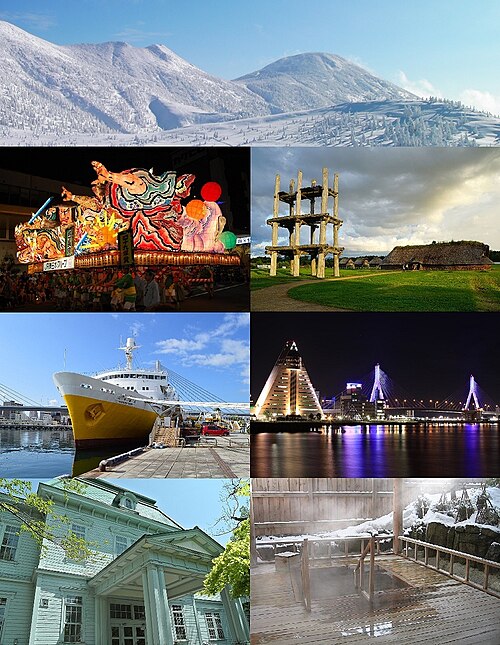
Aomori is a city located in the northern part of Japan's Honshu island, serving as the capital of Aomori Prefecture. Positioned at the northern tip of the Tsugaru Peninsula, it overlooks the Tsugaru Strait, which separates Honshu from Hokkaido. Aomori has a population of approximately 280,000 residents, making it a significant urban center in the region. The city's economy largely revolves around agriculture, fishing, and forestry, with a rich cultural heritage that has been shaped by its geographic location. Aomori is renowned for its production of high-quality apples, which are celebrated annually during the Aomori Apple Festival, drawing visitors to partake in apple-themed activities and local cuisine.
Culturally, Aomori is famous for its traditional festivals, particularly the Aomori Nebuta Matsuri, held every August. This vibrant event features elaborately designed floats adorned with illuminated paper lanterns, depicting historical figures, gods, and mythical creatures. The festival attracts millions of tourists who come to witness the lively parades and traditional music performances. Aomori is also home to several historical and cultural sites, such as the Aomori Museum of Art, which showcases contemporary works and emphasizes the connection between art and the surrounding natural landscape. Additionally, the Sannai-Maruyama site, an archaeological site from the Jomon period, highlights the area's ancient history and cultural significance. Natural attractions, including the nearby Hakkoda Mountains and Lake Towada, offer opportunities for outdoor recreation such as hiking and skiing, further enhancing Aomori's appeal as a destination rich in both culture and natural beauty.
Facts about Aomori
- Aomori is home to the famous Nebuta Matsuri, a vibrant summer festival featuring large, illuminated floats and traditional music, attracting visitors from across Japan and abroad.
- The Aomori Prefectural Museum of Art houses significant works, including pieces by the local artist Yoshitomo Nara, known for his contemporary artworks that often feature playful yet poignant characters.
- It is known for its abundance of apples, producing roughly 70% of Japan's apple harvest, leading it to be nicknamed 'Apple City.'
- Aomori's Hakkoda Mountains are famous for their unique snowfall phenomenon called 'snow monsters' (juhyo), which are trees covered in frost and snow, creating otherworldly landscapes during winter.
- The city features the Aomori Bay Bridge, known as one of Japan's longest bridges, which offers stunning views of Mutsu Bay, especially at sunset.
- Aomori is the northernmost point on Honshu Island and the last major city before entering the cold northern areas of Japan, contributing to its unique climate and culture.
- The Sannai-Maruyama site, dating back to the Jomon period, is an important archaeological site that showcases many ancient artifacts and dwelling structures, indicating early human habitation in the area.
- Aomori is also noted for its seafood, particularly its fresh scallops and tuna, and is a popular destination for foodies seeking authentic Japanese cuisine.
- The city is recognized for its strong connection to the indigenous Ainu culture, with museums and events that celebrate and preserve Ainu heritage.
- Aomori hosts the Aomori Summer Festival, featuring traditional games, dances, and food stalls, creating a lively atmosphere that reflects the region's rich cultural traditions.