Arad, Romania
- 169,065 people
- 11 places to visit
- 46.1866, 21.3123
Places to Visit (11)
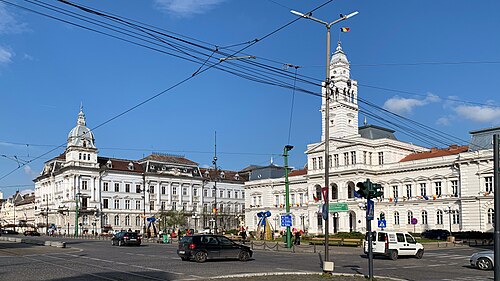
Arad is a city located in western Romania, serving as the capital of Arad County. Situated near the Mureș River and just a few kilometers from the Hungarian border, it has a rich historical significance and serves as an important cultural and economic hub in the region. The city’s origins date back to the Roman era, with evidence of settlements from the 2nd century AD. Throughout history, Arad has been influenced by various cultures and empires, including the Dacians, Romans, Ottomans, and Austro-Hungarians, which is reflected in its diverse architecture and cultural heritage.
One prominent feature of Arad is its architecture, which showcases a blend of Baroque, Secessionist, and Neoclassical styles. The city boasts numerous notable buildings, such as the neo-Gothic Church of the Virgin Mary, the Baroque-style City Hall, and the imposing Culture Palace. Arad also has a vibrant cultural scene, hosting numerous theaters, museums, and galleries. The city's theaters, such as the Arad State Theater, feature a range of performances, while museums like the Arad Museum Complex offer insights into the local history and art. Additionally, Arad is known for its green spaces, such as the Vasile Goldiș Central Park, providing residents and visitors with areas for recreation and relaxation.
Economically, Arad benefits from its strategic location along important transportation corridors, connecting Romania to Hungary and the rest of Europe. Its industrial base includes manufacturing, textiles, and transportation, while the agricultural sector also plays a vital role in the local economy. Over the years, Arad has developed into an important logistics and commercial center, attracting both domestic and international investment. With its historical depth, cultural richness, and economic prospects, Arad stands as a vibrant example of Romania's diverse urban landscape.
Facts about Arad
- Arad is known for its rich architectural heritage, featuring a blend of Baroque, Neoclassical, and Secessionist styles, which is distinct from many other cities in Romania.
- The city is home to the oldest wooden church in Romania, the Church of Saint Nicholas, dating back to the 18th century, showcasing unique cultural and historical significance.
- Arad was a key location during the Hungarian Revolution of 1848 and has a monument, the 'United Nations Memorial,' to commemorate the events of the revolution.
- The Arad Fortress, built in the late 18th century, is one of the best-preserved fortifications in Romania and serves as a unique historical landmark not commonly found in other Romanian cities.
- Arad is recognized for its vibrant cultural scene, hosting events such as the 'Arad International Theater Festival,' which attracts performers and audiences from various countries.
- The city is known for its significant contribution to Romanian literature, being the birthplace of several prominent authors, including the famed playwright and poet Ion Luca Caragiale.
- Arad's proximity to the Mureș River has historically made it a crucial trading point, giving it a unique economic status compared to other Romanian towns.
- The city is also famous for its impressive railway station, a historical building that serves as a nod to Arad's significance in the development of Romania's rail network.
- Arad is part of the 'Banat' region, which is distinguished by its multicultural population, including Romanians, Hungarians, Germans, and Serbs, contributing to its diverse cultural identity.
- The city features the 'Arad City Hall,' a remarkable example of Neo-Gothic architecture, setting it apart from the more traditional styles seen in other Romanian urban centers.