Arequipa, Peru
- 1,008,290 people
- 14 places to visit
- -16.409, -71.5375
Places to Visit (14)
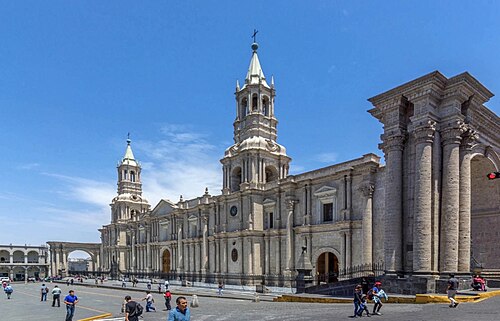
Arequipa, often referred to as the "White City" due to its distinctive architecture made from sillar, a white volcanic stone, is the second-largest city in Peru. Located in the southern part of the country at an elevation of 2,335 meters (7,661 feet) above sea level, Arequipa is surrounded by stunning natural features, including the towering volcanoes of Misti, Chachani, and Pichu Pichu. Founded in 1540, the city has a rich colonial history, blending Spanish architecture with indigenous influences. Its historical center, designated a UNESCO World Heritage Site in 2000, is filled with beautiful plazas, churches, and the majestic Santa Catalina Monastery, which serves as a testament to the city’s religious and cultural importance.
Economically, Arequipa plays a crucial role in Peru, being a hub for trade and industry in the southern region. The city's economy is bolstered by agriculture, mining, and tourism. Arequipa is known for its agricultural products, particularly its pristine white cheese, which is a staple in many traditional dishes. The region is also rich in mineral resources, which significantly contribute to Peru's mining sector. Tourism thrives due to Arequipa's scenic beauty, vibrant culture, and historical significance, attracting travelers interested in exploring the Colca Canyon, one of the deepest canyons in the world, and engaging with the local traditions and cuisine, including the famous rocoto relleno and chupe de camarones. The city’s blend of natural beauty, historical significance, and economic vitality makes Arequipa a unique and captivating destination in Peru.
Facts about Arequipa
- Arequipa is known as 'La Ciudad Blanca' (The White City) due to its unique buildings made of sillar, a white volcanic rock.
- The city is located at an altitude of 2,335 meters (7,661 feet) above sea level, making it one of the highest major cities in the world.
- Arequipa is home to the Santa Catalina Monastery, a 20,000-square-meter convent that resembles a small city and was established in 1579.
- The Misti Volcano, an iconic symbol of Arequipa, looms over the city and is an active volcano that last erupted in 1985.
- Arequipa is renowned for its traditional cuisine, particularly dishes like rocoto relleno (stuffed spicy peppers) and adobo arequipeño (marinated pork).
- The historic center of Arequipa was declared a UNESCO World Heritage Site in 2000, recognized for its impressive colonial architecture.
- Arequipa hosts the annual Festival of the Virgin of Chapi, which includes a massive pilgrimage and attracts thousands of participants.
- The city's economy is predominantly driven by agriculture and industry, making it the second-largest city and an economic hub in Peru.
- Arequipa has a rich history of political and social activism, historically serving as a center for anti-colonial and revolutionary movements.
- The city is surrounded by three volcanoes (Misti, Chachani, and Pichu Pichu), offering stunning landscapes and opportunities for outdoor activities.