Árgos, Greece
- 22,209 people
- 11 places to visit
- 37.6352, 22.7289
Places to Visit (11)
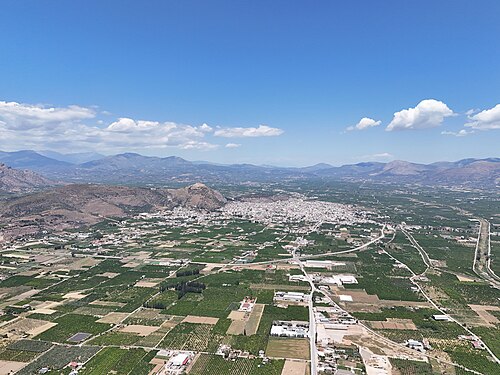
Árgos is a historic city situated in the northeastern part of the Peloponnese peninsula in Greece. It is located near the Gulf of Argolis and stands as one of the oldest continuously inhabited cities in the world, with evidence of settlement dating back to the Neolithic period. The city has a rich history intertwined with ancient Greek civilization, particularly during the Mycenaean and classical eras. Árgos was known for its powerful political influence, particularly as a rival of Sparta and Corinth. The ruins of ancient monuments, theaters, and temples still bear witness to its significance during antiquity, including the well-preserved theater from the Hellenistic period and the Temple of Hera, which was part of the sanctuary dedicated to the goddess Hera.
Modern Árgos serves as a commercial and agricultural center, with a population of approximately 25,000 residents. The city has undergone various transformations throughout its long history, experiencing periods of decline and resurgence. It is well-known for its production of marble, ceramics, and agricultural products, including olives and citrus fruits. The local economy is bolstered by tourism, with visitors drawn to its archaeological sites, museums, and rich cultural heritage. The nearby ancient theater of Epidaurus and the archaeological site of Mycenae — both UNESCO World Heritage Sites — further enhance Árgos's appeal as a cultural destination. The city is also famous for its vibrant local festivals, reflecting traditional Greek culture and communal spirit, which offer insights into the region's customs and contemporary way of life.
In recent years, efforts have been made to preserve Árgos's historical heritage while promoting sustainable tourism and development. The city combines ancient and modern elements, offering visitors a unique glimpse into both its storied past and its ongoing evolution. As a key part of the regional identity, Árgos stands as a testament to Greece's enduring legacy and continues to be a focal point for those interested in exploring the depths of Greek history and culture.
Facts about Árgos
- Árgos is one of the oldest continuously inhabited cities in the world, with a history that dates back over 3,000 years.
- The city was a prominent center of ancient Greek civilization and played a significant role in the myth of the Argonauts, particularly with its legendary hero Perseus.
- Árgos is famous for its ancient theater, which could seat up to 20,000 spectators and is one of the best-preserved theaters from antiquity in Greece.
- The city is home to the Temple of Hera, a UNESCO World Heritage site, which was an important site for the ancient worship of the goddess Hera.
- Árgos was a major center for the production of various art forms, including sculpture and pottery, particularly during the Archaic and Classical periods.
- The ancient ruins of Mycenae, a UNESCO World Heritage Site and central to both Greek mythology and history, are located just a short distance from Árgos.
- Árgos was also the birthplace of several significant figures in Greek history, including the philosopher and sage Anaxagoras.
- The city played a role in the Peloponnesian War and was aligned with various city-states at different times, showcasing its strategic importance.
- Árgos hosts an annual festival known as the 'Argos Festival', which celebrates local traditions, culture, and heritage with various events and performances.
- Today, Árgos is known for its agricultural output, particularly in the production of citrus fruits and vegetables, distinguishing it economically from many other Greek cities.