Århus, Denmark
- 285,273 people
- 17 places to visit
- 56.1629, 10.2039
Places to Visit (17)
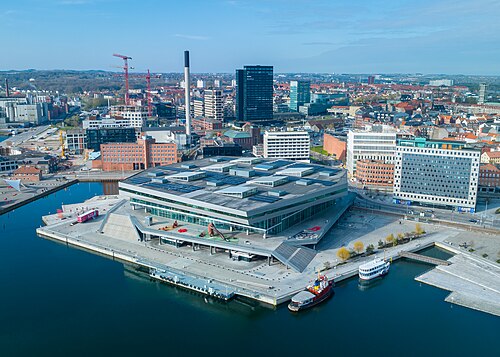
Århus, often spelled Aarhus, is the second-largest city in Denmark, located on the country’s eastern coastline in the region of Midtjylland. With a population of approximately 350,000, it is a vibrant urban center known for its rich history, cultural diversity, and economic significance. The city’s origins date back to the Viking Age, and it has grown from a small trading post into a bustling metropolitan area. Århus is characterized by a blend of historical architecture and modern design, reflected in its picturesque cobblestone streets and innovative buildings. The city’s most notable landmarks include the Aarhus Cathedral, which dates back to the 12th century, and the ARoS Aarhus Art Museum, famous for its rooftop rainbow panorama.
In addition to its historical significance, Århus is also recognized for its thriving educational institutions, particularly Aarhus University, which is one of the largest universities in Denmark and plays a crucial role in research and development. The city's economy is diverse, with key sectors including education, technology, and maritime industries. Århus also hosts various cultural events and festivals throughout the year, such as the Aarhus Festival, which celebrates art, music, and performance. The city's commitment to sustainability is evident in its numerous green spaces, cycling infrastructure, and initiatives aimed at reducing carbon emissions, positioning Århus as a leader in urban environmental practices. Overall, Århus combines its historical roots with contemporary advancements, making it a dynamic place to live, work, and visit.
Facts about Århus
- Aarhus is the second-largest city in Denmark, often referred to as 'the city of smiles'.
- The city was founded over 1,000 years ago, making it one of the oldest cities in Denmark.
- Aarhus is home to the ARoS Aarhus Art Museum, which features a famous rooftop rainbow panorama that offers stunning views of the city.
- The city has a notable Viking history, with the 'Viking Museum' showcasing artifacts and reconstructions related to early Danish life.
- Aarhus hosts the annual Aarhus Festival, one of the largest cultural festivals in Scandinavia, featuring music, art, and performances.
- The University of Aarhus, established in 1928, is among the largest universities in Denmark and has a strong focus on research and innovation.
- In 2017, Aarhus was designated the European Capital of Culture, showcasing its vibrant cultural scene and diversity.
- The Old Town (Den Gamle By) is an open-air museum that displays Danish urban history from the 16th century onwards with historic buildings relocated from various parts of Denmark.
- Aarhus has a strong maritime heritage, and its harbor area has undergone significant redevelopment into the vibrant Aarhus Ø district, known for its modern architecture.
- The city is a hub for Danish gastronomy, with numerous Michelin-starred restaurants, including the world-renowned restaurant 'Restaurant Frederikshøj.'