Arima, Trinidad and Tobago
- 35,000 people
- 9 places to visit
- 10.6319, -61.2845
Places to Visit (9)
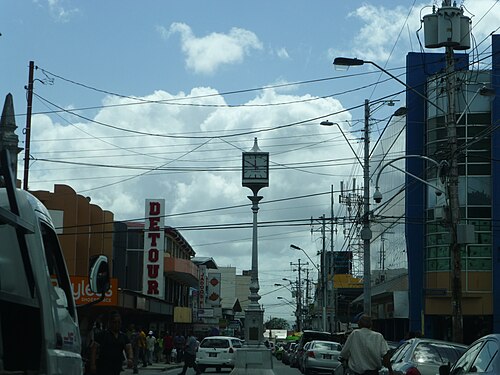
Arima is a vibrant town located in the northern part of Trinidad and Tobago, positioned approximately 20 kilometers east of the capital city, Port of Spain. As the administrative center of the Arima Regional Corporation, it serves as a vital hub for the surrounding communities. Known as a cultural melting pot, Arima is home to a diverse population comprising various ethnicities, including Afro-Trinidadians, Indo-Trinidadians, and members of the indigenous Carib community. The town is characterized by its rich history and traditions, which manifest in numerous festivals and events celebrated throughout the year, such as the annual Carnival festivities and the traditional Indian festival of Divali.
Arima is notable for its historical significance, as it was one of the first towns established in Trinidad, with roots tracing back to the 18th century. The town features several landmarks, including the Arima Cathedral, which is an iconic symbol of the community, and the Arima Dial, a prominent clock tower that serves as a meeting point for residents. The area is also renowned for its natural beauty, surrounded by lush hills and valleys that offer a picturesque backdrop. Additionally, Arima boasts various amenities, including parks, schools, and health facilities, making it a well-rounded municipality. The town is served by major roadways, facilitating access to other regions and contributing to its role as a commercial center. Overall, Arima stands out as an essential part of Trinidad and Tobago's cultural and geographic landscape, offering a glimpse of the nation's rich heritage and community spirit.
Facts about Arima
- Arima is known as the 'Gateway to the East' in Trinidad and Tobago, contrasting with other cities by its strategic location that provides access to the eastern coast and hinterlands.
- The city is home to the famous Arima River, which is significant for its biodiversity and plays a critical ecological role in the area, distinguishing it from other urban environments in Trinidad.
- Arima is recognized for its rich history linked to the indigenous Carib people, with archaeological sites like the Arima Valley that showcases pre-Columbian artifacts, setting it apart from many other Trinidadian towns.
- The city hosts the annual 'Arima Carnival,' a vibrant celebration that reflects the local culture and traditions, making it a unique feature compared to the larger Carnival celebrations in Port of Spain.
- Arima is noted for its historic St. Mary's College, established in 1866, which is one of the oldest secondary schools in Trinidad and contributes to the area's educational legacy.
- The city has a distinct architectural style with many well-preserved colonial-era buildings that showcase its historical significance, unlike the more modern developments found in larger cities.
- Arima is famous for the Arima Cultural Center, which celebrates the diverse cultures of its residents, including significant contributions from African, Indian, and indigenous communities, differentiating it from other cultural sites in Trinidad.
- The town celebrates the annual Fiesta de la Virgen de la Rosa Mystica, a unique religious event that draws attention and crowds, showcasing local devotion and cultural expression.
- Arima's lush natural surroundings, including the neighboring Northern Range mountains, offer unique hiking and outdoor opportunities that are not as prevalent in other urban centers in Trinidad.
- The economy of Arima is characterized by a mix of agriculture and trade, with local markets that offer fresh produce and handcrafted goods, distinguishing it from more industrialized towns in the country.