Arkhangel’sk, Russian Federation
- 349,742 people
- 10 places to visit
- 64.5459, 40.5506
Places to Visit (10)
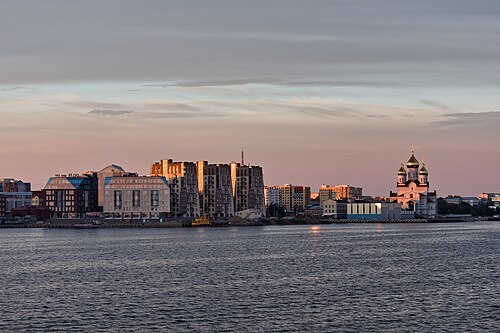
Arkhangel’sk, also known as Arkhangelsk, is a significant city located in the northwestern part of the Russian Federation. Founded in 1584 by Tsar Ivan IV (Ivan the Terrible), it was originally established as a port city on the Northern Dvina River, providing access to the White Sea and facilitating trade with Western Europe. Its strategic location made it a vital commercial and military center, particularly during the period of Russian expansion into the Arctic and Siberia. With a population of approximately 350,000 inhabitants, Arkhangel’sk serves as the administrative center of Arkhangelsk Oblast and is recognized for its rich history, architectural heritage, and cultural significance.
Arkhangel’sk has evolved into an important industrial hub, contributing to the timber, shipbuilding, and fishing industries, among others. The city is home to several educational institutions, including universities and vocational schools, supporting the workforce needed for its economic activities. One of its notable landmarks is the Arkhangelsk State Technical University, which specializes in shipbuilding and marine engineering. The city also boasts historical sites such as the Dvina Embankment, various churches reflecting its Orthodox Christian heritage, and a number of museums that showcase its maritime history and Arctic exploration. The modern-day economy of Arkhangel’sk is influenced by its beautiful natural surroundings, with opportunities for outdoor activities and tourism, particularly during the brief summer months when the region experiences the phenomenon of the midnight sun.
Despite its historical significance and industrial growth, Arkhangel’sk, like many other northern cities, faces challenges such as economic diversification and population decline due to migration. Nonetheless, the city remains a key gateway to the Arctic and holds potential for future development, especially as interest in Arctic resources and shipping routes continues to rise. The rich cultural life of Arkhangel’sk, characterized by local traditions, festivals, and art, contributes to its identity as a vibrant community with a unique combination of history and modernity. As the city looks to the future, efforts to preserve its heritage while embracing innovation will be crucial in maintaining its significance in the Russian Federation and beyond.
Facts about Arkhangel’sk
- Arkhangel’sk is one of the oldest cities in Russia, founded in 1584 by Tsar Ivan IV as a port on the Northern Dvina River.
- It played a significant role as a port city and was a key center for trade and naval operations in the Russian Empire during the 18th and 19th centuries.
- The city is home to the historic wooden architecture of the Arkhangelsk region, with unique traditional houses that reflect the local culture and history.
- Arkhangel’sk is known for its harsh Arctic climate, with long, cold winters and short, mild summers, distinguishing it from many other Russian cities.
- The Northern Dvina River, which flows through the city, is a vital waterway that has been crucial for transportation and commerce in the region.
- Arkhangel’sk was a major base during World War II for convoys supplying the Soviet Union via the Arctic and Northern Sea routes.
- The city is famous for the Arkhangelsk Regional Museum, which houses significant collections of local history, art, and ethnography.
- Arkhangel’sk hosts the annual 'White Nights' festival, celebrating the unique natural phenomenon of midnight sun and cultural events in the summer.
- It is also known for its diverse maritime history, including the establishment of the Russian Arctic fleet in the 18th century.
- Arkhangel’sk is recognized for its scientific contributions to Arctic exploration and ecology, making it significant for environmental studies.