Arrah, India
- 223,676 people
- 1 places to visit
- 25.5541, 84.6665
Places to Visit (1)
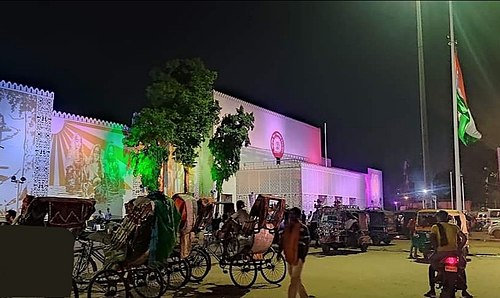
Arrah is a city located in the Bhojpur district of Bihar, India. Situated approximately 50 kilometers east of the state capital, Patna, Arrah has played a significant role in the historical, cultural, and economic landscape of the region. Known for its rich heritage, the city boasts a variety of temples, historical sites, and a vibrant local culture that is deeply influenced by the traditions of Bihar. The city is named after the Arra River, which flows nearby, contributing to the fertile agricultural land that characterizes the area. Agriculture remains a primary occupation for many residents, with crops such as rice, wheat, and pulses being widely cultivated.
The city gained prominence during the British colonial period when it was a focal point in the fight for India's independence. Arrah is notably recognized for the Arrah uprising of 1857, which was one of the first revolts against British rule in India. This event has engraved itself into the annals of history, highlighting local leaders like Babu Kunwar Singh, a prominent freedom fighter associated with the rebellion. Besides its historical significance, Arrah is also a hub for education and commerce, with several educational institutions established over the years. The city is well-connected through road and rail networks, making it accessible for trade and travel. Arrah's economy is further supported by small-scale industries, including textile and food processing, which contribute to both local employment and the overall economic development of the region.
Culturally, Arrah is vibrant, celebrating various festivals and events that bring together its community. The city reflects a blend of traditional Bihari culture and modern influences, seen in its cuisine, music, and lifestyle. Local festivals, such as Chhath Puja and Durga Puja, showcase the rich cultural heritage and the deep spiritual ethos of its residents. Overall, Arrah stands as a testament to Bihar's historical struggles, cultural richness, and evolving economy, making it an intriguing city in India's diverse landscape.
Facts about Arrah
- Arrah was the site of the first major rebellion against British rule in India during the Indian Rebellion of 1857, known as the Arrah Incident.
- The city is home to the ancient mosque known as the 'Lal Masjid', which dates back to the Mughal era, showcasing Indo-Islamic architecture.
- Arrah is famous for its rich cultural heritage, including the traditional folk dance called 'Bidesia', which reflects the region's rural life and concerns.
- The city was the birthplace of the renowned freedom fighter and revolutionary Bhagat Singh's associate, Karam Singh, who played an important role in the independence movement.
- Arrah serves as a significant educational center with institutions such as the Jagdanand Singh College, contributing to the region's academic growth.
- The city is situated on the banks of the Ganges River, making it an important location for trade and agriculture in Bihar.
- Arrah has a unique historical connection with the legendary Figure of 'Baba Ajit Singh', whose shrine attracts many pilgrims and tourists every year.
- The city hosts the annual 'Chhath Puja' festival, celebrating the Sun God, which is one of the most important festivals in Bihar and draws thousands of devotees.
- Arrah is known for its vibrant markets and local handicrafts, particularly handloom textiles and traditional art forms that represent the cultural diversity of the region.
- The Grand Trunk Road, one of Asia's oldest and longest major roads, passes through Arrah, historically linking it to various parts of India and facilitating trade and travel.