Árta, Greece
- 21,895 people
- 8 places to visit
- 39.1582, 20.9877
Places to Visit (8)
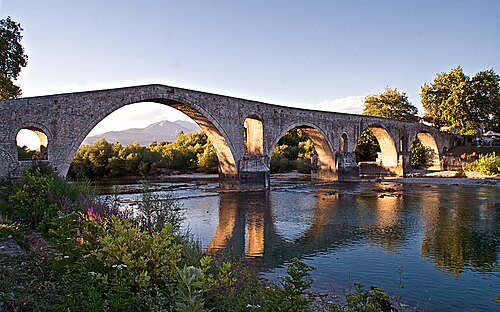
Árta is a city situated in the northwestern part of Greece, serving as the capital of the regional unit of Árta within the Epirus region. It lies along the banks of the Arachthos River and is approximately 20 kilometers south of the larger city of Ioannina. Ártas geography is characterized by its rich agricultural landscape, predominantly featuring olive groves and fertile plains, making it an important center for agriculture in the region. The city itself boasts a blend of historical significance and modern development, with a population of around 20,000 residents.
The history of Árta dates back to antiquity, and the area has been inhabited since the Neolithic period. The ancient town of Ambrakia, located nearby, was prominent during the Hellenistic period and played a key role in Greek history. A notable landmark in the city is the famous Bridge of Árta, built in the 17th century, which carries a myriad of local legends surrounding its construction and is considered an emblem of the city. The city features several historical sites, including the Byzantine-style Church of Agios Dimitrios and the Koursoum Mosque, which captures the diverse cultural influences that have shaped Árta over the centuries.
Today, Ártas economy is largely driven by agriculture, commerce, and tourism. Visitors are drawn to the city’s historical architecture, natural beauty, and vibrant local culture. Each year, various cultural events and festivals celebrate local traditions, further enriching the experience for both residents and tourists. The rich myths and history surrounding Árta, coupled with its picturesque landscapes, make it a unique destination in Greece, blending its ancient past with the vibrant life of a modern city.
Facts about Árta
- Árta is famous for its unique 'Bridge of Árta', an architectural wonder built during the 17th century, known for its intriguing legends and historical significance.
- The town is home to the stunning Byzantine church of Saint Demetrius, which features remarkable frescoes and is a significant example of medieval architecture.
- Árta has a rich cultural heritage, being the birthplace of the ancient Greek poet Archestratus, who is often referred to as the first food writer.
- The region's history dates back to antiquity, with archaeological sites revealing continuous human habitation for thousands of years.
- Árta was the capital of the short-lived state of Epirus during the 18th century and had an important role in the region's political landscape.
- The area is known for the historical center's well-preserved Ottoman-era architecture, providing a glimpse into its diverse cultural influences.
- Árta is surrounded by lush landscapes, including the Arachthos River, which is popular for outdoor activities such as rafting and hiking.
- The town hosts the annual Árta Carnival, a vibrant celebration that showcases local traditions, music, and dance, attracting visitors from surrounding areas.
- Árta is recognized for its traditional folk music and dance, with local festivals often featuring performances that highlight the region's musical heritage.
- The famous local specialty, 'Arta wine', is produced from indigenous grape varieties and has a growing reputation in the regional wine industry.