Ascoli Piceno, Italy
- 41,741 people
- 10 places to visit
- 42.8541, 13.5688
Places to Visit (10)
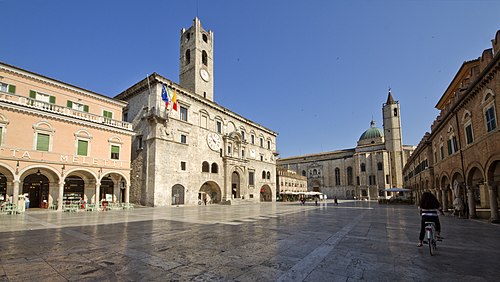
Ascoli Piceno is a charming city located in the Marche region of central Italy. Known for its rich historical heritage, it lies at the confluence of the Tronto and Castellano rivers, surrounded by the picturesque Apennine mountains. The origins of Ascoli Piceno date back to ancient times, with evidence of Roman settlement seen in its architecture and urban layout. The city was originally founded by the Piceni, an ancient Italic tribe, and later came under Roman control in the 3rd century BC. Today, visitors can explore remnants of this history, such as the impressive Piazza del Popolo, considered one of Italy's most beautiful squares, which features elegant medieval buildings like the Palazzo dei Capitani del Popolo and the Church of San Francesco.
A defining characteristic of Ascoli Piceno is its unique architectural style, which predominantly features travertine stone, giving the city a distinctive, warm tone. The city's historical center is a labyrinth of narrow streets, artisan shops, and ancient churches that reflect various architectural styles from different periods. One of the city's notable landmarks is the 13th-century Romanesque-Gothic cathedral, Duomo di Sant'Emidio, dedicated to the city's patron saint, which showcases stunning works of art and impressive frescoes. Ascoli Piceno is also known for its traditional culinary delights, including "olive all'Ascolana," a local specialty of stuffed and fried olives, which captures the region's rich agricultural heritage.
Ascoli Piceno enjoys a relatively mild climate, making it an attractive destination year-round. The city serves as a gateway to explore the surrounding countryside, including the scenic Sibillini Mountains and various nearby historical towns. The local economy benefits from agriculture, tourism, and artisan crafts, with a focus on maintaining traditional methods and promoting cultural heritage. Each summer, Ascoli hosts a series of festivals and events, such as the Quintana, a historical reenactment of medieval jousts, adding to its vibrant cultural tapestry. With its blend of history, architecture, and gastronomy, Ascoli Piceno offers an authentic Italian experience, appealing to both history enthusiasts and casual travelers alike.
Facts about Ascoli Piceno
- Ascoli Piceno is renowned for its stunning medieval architecture and is home to the iconic Piazza del Popolo, considered one of the most beautiful squares in Italy.
- The city is famous for its distinctive travertine stone, which is used in many of its historic buildings, giving Ascoli Piceno a unique architectural character.
- Ascoli Piceno is known for its culinary specialty, Olive all'Ascolana, which are stuffed and fried green olives that originated from the region and have become a popular Italian snack.
- The city played a significant role in the history of the Piceni people, who were an ancient Italic civilization that flourished in the region before Roman dominance.
- Ascoli Piceno is home to the 13th-century Church of San Francesco, an exemplary piece of Gothic architecture, featuring a stunning rose window and significant art within.
- The city hosts the Quintana, a historical reenactment and jousting tournament held annually in July and August, celebrating medieval traditions and attracting thousands of visitors.
- The Calanchi of Ascoli Piceno, a unique geological formation of clay badlands, offer breathtaking views and serve as a natural landmark distinguishing the region's landscape.
- Ascoli Piceno is the birthplace of notable figures, including the poet and scholar Giacomo Leopardi and the artist Francesco Paolo Michetti, contributing to its cultural significance.
- The city has a well-preserved Roman theater dating back to the 1st century BC, showcasing its historical importance and the influence of the Roman Empire in the area.
- Ascoli Piceno is one of the few Italian cities that has maintained its medieval layout, making it an important example of urban planning from the Middle Ages.