Ashton-under-Lyne, United Kingdom
- 43,675 people
- 17 places to visit
- 53.4872, -2.0974
Places to Visit (17)
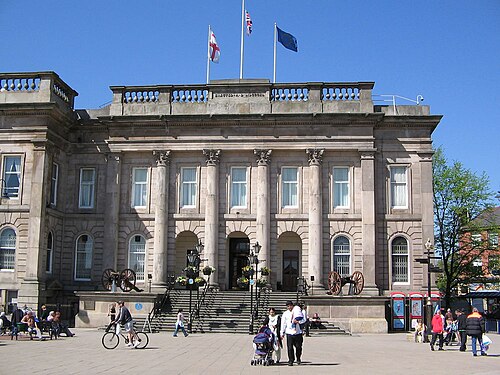
Ashton-under-Lyne is a town within the Metropolitan Borough of Tameside, located in Greater Manchester, England. Positioned approximately 7 miles east of Manchester city center, it has a rich history that dates back to the 13th century. The town originally developed around the village of Ashton, which became prominent during the Industrial Revolution due to its thriving textile industry, particularly cotton milling. This industrial boom transformed Ashton into an urban center, leading to significant population growth and the establishment of many of its characteristic red-brick buildings. The town's economy gradually diversified throughout the 20th century, although remnants of its industrial past still shape its landscape.
The town center of Ashton-under-Lyne features a variety of shops, restaurants, and cultural attractions. The market, which has been a vital part of the community since the early 1800s, continues to attract visitors with its diverse range of goods. Historically, Ashton also hosts prominent architectural landmarks, including the Ashton Town Hall, built in the late Victorian era, and St. Michael's Church, which illustrates Gothic Revival architecture. In addition to its historical significance, Ashton has invested in public transport infrastructure, with the introduction of Metrolink tram services, enhancing connectivity to Manchester and beyond. The surrounding area offers natural beauty, with parks such as Ladysmith Park and Waterloo Park providing recreational spaces for residents.
Ashton-under-Lyne is home to a diverse population, reflecting the broader multicultural makeup of Greater Manchester. The town hosts various events throughout the year, including festivals that celebrate its cultural heritage and community spirit. Education plays an essential role in Ashton, with several primary and secondary schools, along with further education institutions. As the town continues to develop, it balances the preservation of its historical identity with contemporary urban growth, making Ashton-under-Lyne a dynamic place that honors its past while looking forward to future opportunities.
Facts about Ashton-under-Lyne
- Ashton-under-Lyne was historically significant during the Industrial Revolution as a center for cotton manufacturing, particularly in the production of cotton goods.
- The town is home to the Ashton Market, established in 1824, which has been recognized as one of the largest indoor markets in the UK and draws visitors from across the region.
- Ashton-under-Lyne features a prominent landmark, the Church of Saint Michael and All Angels, which dates back to the 13th century, showcasing stunning Gothic architecture.
- The town has been celebrated for its annual festival, the Ashton Agricultural Show, which highlights local farming heritage and attracts numerous visitors every September.
- Ashton-under-Lyne is unique in having the oldest surviving public library in the area, established in 1857, which still serves the community with a wide range of resources.
- The nearby Tame River, which flows through the town, has been pivotal in shaping Ashton’s development and was historically utilized for powering mills.
- Ashton-under-Lyne is known for its historical connection to the Great Manchester Fire of 1783, which devastated parts of the nearby region, prompting significant urban renewal.
- The town has a strong public art presence, including a notable sculpture installation at the Town Hall which celebrates its rich industrial history.
- Ashton-under-Lyne is part of the Greater Manchester area and is uniquely positioned on the A635 road, linking it closely with both Manchester and Yorkshire.
- The town hosts the annual Ashton Music Festival, showcasing local talent and fostering community spirit through live performances across multiple genres.