Astana, Kazakhstan
- 345,604 people
- 18 places to visit
- 51.1655, 71.4272
Places to Visit (18)
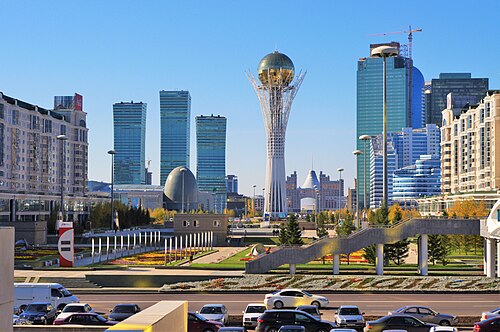
Astana, officially renamed Nur-Sultan in 2019, is the capital city of Kazakhstan, located in the country's north-central region along the banks of the Ishim River. Established as the capital in 1997, the city replaced Almaty due to its more central location and potential for growth. As a planned city, Astana is characterized by its modern architecture, urban design, and rapid development. It has transformed from a small Soviet-era town into a vibrant metropolis, reflecting Kazakhstan's ambitions as a leader in Central Asia. The city is known for its diverse structures, including the iconic Bayterek Tower, which symbolizes national aspirations, and the futuristic Khan Shatyr Entertainment Center, one of the largest tents in the world.
Astana's climate is classified as continental, with cold winters and hot summers, presenting a unique set of challenges and opportunities for urban planning and development. The city serves as a political, cultural, and economic center, hosting several key government offices, foreign embassies, and international events, including the Expo 2017, which focused on future energy. The local economy benefits from the country's rich natural resources, including oil and gas, and Astana plays a crucial role in driving economic diversification and innovation. As Kazakhstan’s administrative capital, it is also a focal point for initiatives aimed at regional stability and international cooperation. The city's development is part of a broader strategy to position Kazakhstan as a hub for trade and investment in Eurasia, emphasizing its importance in both regional and global contexts.
Facts about Astana
- Astana, renamed Nur-Sultan in 2019, became the capital of Kazakhstan in 1997, replacing Almaty.
- The city is renowned for its futuristic architecture, with iconic structures like the Bayterek Tower and the Khan Shatyr Entertainment Center.
- Astana hosted the EXPO 2017, themed 'Future Energy', showcasing advancements in energy and technology from around the world.
- The city experiences extreme temperatures, with winter lows reaching -40°C (-40°F) and summer highs of 40°C (104°F), making it one of the coldest capitals in the world.
- Astana design incorporates elements of traditional Kazakh culture, with modern innovations such as the unique 'Cultural and Entertainment Center' that resembles a yurt.
- Astana's skyline is filled with buildings designed by internationally renowned architects, including Norman Foster and Kengo Kuma.
- The city has a unique, planned layout inspired by the ‘Eurasian’ concept, integrating urban planning with green spaces and sustainable living.
- Astana features the largest mosque in Central Asia, the Hazrat Sultan Mosque, which can accommodate over 10,000 worshippers.
- The capital city is home to the Palace of Peace and Reconciliation, a pyramid structure that promotes interfaith dialogue and has been a center for international conferences.
- Astana's status as a political, economic, and cultural hub makes it a home to many international organizations and embassies, underscoring its role in global diplomacy.