Athens, Greece
- 664,046 people
- 12 places to visit
- 37.9838, 23.7275
Places to Visit (12)
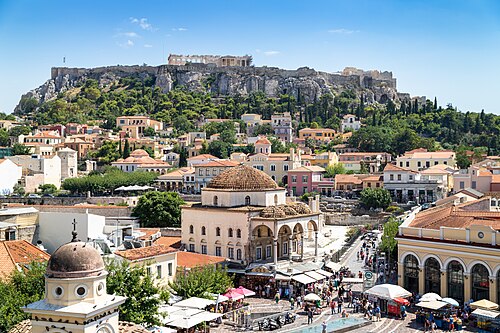
Athens, the capital city of Greece, is one of the world's oldest cities, with a history that spans over 3,400 years. It emerged as a powerful city-state during the 5th century BC, known as the birthplace of democracy and the cradle of Western civilization. The city played a pivotal role in ancient history, particularly during the Golden Age, when it became a hub for art, philosophy, and education. Prominent figures such as Socrates, Plato, and Aristotle emerged from Athens, and landmarks like the Acropolis and the Parthenon remain as testaments to its cultural and architectural achievements.
Today, Athens is a vibrant metropolis that seamlessly blends ancient history with modern life. It is the largest city in Greece, home to over three million residents in its urban area. The city boasts a Mediterranean climate, characterized by hot, dry summers and mild, wet winters. Athens is not only a political, economic, and cultural center but also a popular tourist destination, attracting millions every year who come to explore its archaeological sites, museums, and lively neighborhoods. The historic center, known as Plaka, is lined with neoclassical buildings, charming cafes, and shops, while areas like Monastiraki and Psiri offer a mix of traditional markets and trendy nightlife.
Despite the challenges it has faced, particularly during the recent economic crisis, Athens continues to thrive and evolve. Infrastructure developments, such as the expansion of public transportation and improvement of urban spaces, have enhanced the city's appeal. Meanwhile, cultural festivals, art exhibitions, and culinary events highlight Athens' dynamic arts scene. With its rich history, vibrant culture, and resilience, Athens remains a captivating city that represents both the legacy of ancient Greek civilization and the energy of contemporary life.
Facts about Athens
- Athens is often referred to as the 'Cradle of Western Civilization' due to its pivotal role in the development of democracy, philosophy, and the arts.
- The Acropolis of Athens, a UNESCO World Heritage Site, is home to the iconic Parthenon, which was dedicated to the goddess Athena and symbolizes ancient Greek architecture.
- Athens is the capital and largest city of Greece, distinguished from other cities by its rich historical significance and vibrant cultural scene.
- The city was the host of the first modern Olympic Games in 1896, which marked the revival of the ancient tradition after nearly 1,500 years.
- Athens boasts the world's largest collection of ancient artifacts, housed in museums such as the Acropolis Museum and the National Archaeological Museum.
- The Athenian Agora served as a public space and marketplace in ancient times, where citizens gathered for various activities, setting it apart from other Greek towns.
- Athens is known for its thriving contemporary art scene, with a plethora of galleries, street art, and cultural festivals that reflect its modern artistic spirit.
- The city has a Mediterranean climate, making it one of the sunniest cities in Europe with over 250 sunny days per year.
- Athens is home to one of the oldest universities in the world, the National and Kapodistrian University of Athens, founded in 1837.
- The annual Athens Epidaurus Festival showcases a variety of performing arts, emphasizing Greece's rich theatrical history and attracting artists from around the globe.