Auxerre, France
- 41,516 people
- 15 places to visit
- 47.7982, 3.5738
Places to Visit (15)
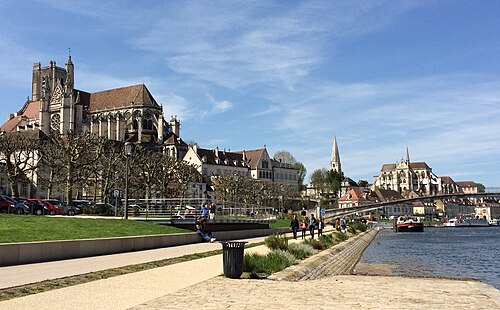
Auxerre is a historic city located in the Bourgogne-Franche-Comté region of central France, renowned for its rich heritage and picturesque landscapes. Situated approximately 170 kilometers southeast of Paris, Auxerre serves as the capital of the Yonne department. The city is positioned along the Yonne River, offering a charming setting that has attracted visitors for centuries. Auxerre's history dates back to Roman times when it was known as Autissiodorum. The remnants of this ancient past are still visible today, with well-preserved structures and archaeological sites that showcase the city's evolution.
One of the standout features of Auxerre is its impressive architectural diversity, which ranges from Romanesque to Gothic styles. The Cathedral of Saint Étienne, a stunning example of Gothic architecture, is perhaps the most iconic landmark in the city. Its intricate façade and remarkable stained-glass windows contribute to the cathedral’s status as a significant religious site and tourist attraction. Auxerre is also home to several other historical monuments, such as the Abbey of Saint-Germain, which contains a remarkable collection of early Christian treasures and ancient manuscripts. The city’s medieval old town, characterized by narrow cobblestone streets and half-timbered houses, invites leisurely exploration and offers glimpses of its vibrant past.
Auxerre is not only defined by its rich history but also by its contemporary cultural scene and economic significance. The city plays host to several annual festivals, including the Fête de la Musique and various wine fairs that celebrate the region's viticulture, making it a lively hub for both residents and visitors. The surrounding Yonne region is also known for its wine production, with many vineyards offering tours and tastings. Auxerre's strategic location near major transportation links, including the A6 motorway and the Paris-Lyon railway line, facilitates easy access to other parts of France, enhancing its appeal as a destination for travelers. In recent years, the city has embraced modernization while preserving its historical essence, making it a unique blend of past and present that continues to charm those who walk its streets.
Facts about Auxerre
- Auxerre is known for its stunning Gothic architecture, particularly the Auxerre Cathedral, which features remarkable stained glass windows and intricate stone carvings.
- The city is located at the confluence of the Yonne River and the Burgundy Canal, making it a significant historical hub for trade and transportation in the region.
- Auxerre is recognized as an important center for wine production, particularly known for its Chablis wines from the nearby vineyards.
- The town has a rich history dating back to the Roman era, with remnants such as ancient walls and the 1st century BC Roman theater.
- Auxerre's historic center is filled with half-timbered houses, narrow streets, and charming squares that reflect its medieval past, making it a UNESCO World Heritage site.
- The city is home to the Saint-Germain Abbey, a significant religious site founded in the 9th century, showcasing the region's ecclesiastical heritage.
- Auxerre hosts the annual 'Festival de la Guitare' (Guitar Festival), which attracts musicians and guitar enthusiasts from across France and beyond.
- The city boasts a unique historical monument known as the 'Tour de la Yonne,' a 15th-century watchtower that offers panoramic views of the surrounding area.
- Auxerre was the birthplace of several notable historical figures, including the famous philosopher and theologian Saint Germain.
- The city's proximity to the Burgundy region allows visitors easy access to explore its famous wine trails and regional cuisine, distinguishing it from many other French towns.