Ávila, Spain
- 56,855 people
- 17 places to visit
- 40.6567, -4.6812
Places to Visit (17)
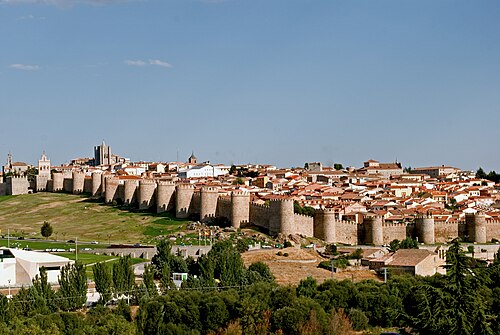
Ávila is a historic city located in the autonomous community of Castile and León, Spain. Renowned for its well-preserved medieval architecture, it is often referred to as the "City of Stones" due to its imposing city walls, which are among the best-preserved in Europe and a UNESCO World Heritage Site since 1985. The walls, built in the late 11th century, stretch for nearly 2.5 kilometers and are punctuated by 88 towers, showcasing a remarkable feat of military engineering from the period. Ávila's cobbled streets and stone buildings exude a distinct charm, with highlights including the majestic Ávila Cathedral that dominates the skyline and the Romanesque-style Basilica of San Vicente.
In addition to its architectural significance, Ávila is steeped in religious history, most prominently linked to Saint Teresa of Ávila, a prominent figure in the Carmelite reform movement during the 16th century. The convent where she was born, the Monastery of the Incarnation, remains an important pilgrimage site. The city also celebrates its rich cultural heritage through various festivals, including the Fiestas de San Teresa, which honor the saint and attract visitors from across the region. Culinary delights can be found in Ávila, particularly the local specialty "yemas," a sweet treat made from egg yolks, and the robust regional cuisine characterized by hearty meat dishes, often featuring the famous Ávila beef.
Strategically located at an elevation of about 1,130 meters, Ávila offers stunning views of the Sierra de Villafranca mountains and serves as a gateway to both natural and historical attractions in the surrounding areas. The city's climate, marked by hot summers and cold winters, adds to the unique experience of visiting, as travelers can enjoy seasonal changes against a backdrop of historical sites. Ávila, with its rich cultural tapestry, historical significance, and architectural prowess, remains a significant destination for those seeking to explore the depth of Spain's medieval past.
Facts about Ávila
- Ávila is renowned for its well-preserved medieval city walls, which are among the best-preserved in the world and were declared a UNESCO World Heritage Site in 1985.
- The city is known as the 'City of Stones' due to its extensive use of granite in its architecture, particularly visible in its iconic walls and historic buildings.
- Ávila is the birthplace of St. Teresa of Ávila, a key figure in the Catholic Reformation, and her convent, the Convento de Santa Teresa, is a major pilgrimage site.
- The city boasts over 80 Romanesque churches, showcasing its rich religious history and architectural significance, making it a unique site for history enthusiasts.
- Ávila is one of the highest capital cities in Spain, situated at an altitude of about 1,130 meters (3,710 feet) above sea level, which contributes to its distinct climate.
- The famous Ávila 'yemas', a pastry made from egg yolks and sugar, are a traditional sweet and part of the city's culinary identity, differentiating it from other regions in Spain.
- The city hosts the annual International Week of Sacred Music, one of the most important festivals of its kind in Spain, attracting performers and audiences from around the world.
- Ávila's layout and architecture reflect its unique history as a fortified town during the Reconquista, which distinguishes it from other Spanish cities that developed under different historical circumstances.
- The city is home to the Royal Monastery of Santo Tomás, an important Gothic monastery that was built in the 15th century and served as a royal burial site, setting it apart from similar structures in Spain.
- Ávila's 1.5 km long double wall, equipped with 88 towers and 9 gates, is unique in Spain for its impressive defensive architecture and remains a significant tourist attraction.