Bacău, Romania
- 171,396 people
- 11 places to visit
- 46.567, 26.9146
Places to Visit (11)
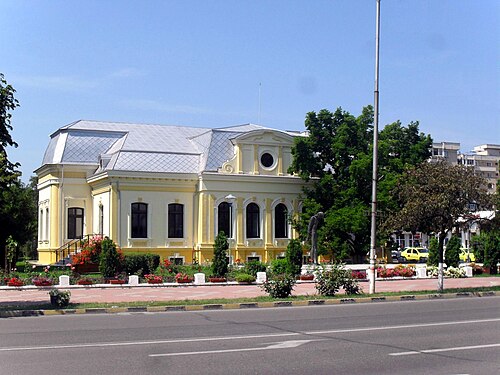
Bacău is a city located in the northeastern part of Romania, serving as the capital of Bacău County. Situated near the Bacău River, the city is an important economic and cultural hub in the region. It has a population of approximately 144,000 residents, making it one of the larger cities in Romania. Bacău is well-connected by road and rail, positioned along major transport routes that link it to other important cities, including Bucharest, Iași, and Suceava. This strategic location has facilitated its development as an industrial center, particularly known for its contributions to textile manufacturing, food processing, and machinery.
The history of Bacău dates back to the Roman period, with archaeological evidence indicating that the area was inhabited as early as the 3rd century AD. The city received its first official documentation in 1408, when it was mentioned in a royal decree issued by Moldavian Prince Alexander the Good. Over the centuries, Bacău has undergone significant transformations, evolving from a modest settlement into a bustling urban center. Notable for its rich cultural heritage, the city hosts several historical landmarks, including the Precista Church, built in the early 19th century, and the recently restored Stephen the Great's Monastery. The Bacău County Museum of History and Archaeology offers insight into the region's past, showcasing artifacts from various historical periods, including the Dacian and Roman eras.
In addition to its historical significance, Bacău is a vibrant cultural center. The city is home to various educational institutions, including universities and colleges, which contribute to the intellectual atmosphere of the region. Annual events, such as the Bacău International Film Festival, celebrate the local arts and attract participants from across the globe. The Bacău International Airport provides access to international travel, further enhancing the city's connectivity. With a blend of modernity and tradition, Bacău continues to grow and evolve, making it a notable destination within Romania.
Facts about Bacău
- Bacău is home to the famous Bacău County Museum, which showcases the rich history and cultural heritage of the region, making it a key cultural institution.
- The city features the unique 'Piatra Sălbată' (Wild Stone), a natural monument located nearby, which is a favorite among hikers and nature enthusiasts.
- Bacău is known for its extensive artistic activity; it hosts the annual 'George Bacovia International Poetry Festival', celebrating the legacy of the renowned Romanian poet.
- The city is recognized for its impressive 'Cancicov Park', a vast green space that offers recreational facilities, a lake, and a rich flora, distinguishing it from other urban areas.
- Bacău has a thriving aviation industry and is notable for its proximity to the Bacău International Airport, an important transportation hub in the region.
- The historic 'Bacău Fortress', built in the 15th century, showcases the city's medieval past and is a significant tourist attraction.
- Bacău is strategically located at the crossroads of major transportation routes connecting eastern and western Romania, enhancing its economic significance.
- The city has a strong tradition in sports, particularly in basketball, being home to the Bacău basketball team, which has won multiple national championships.
- Bacău also boasts the only 'European Art Cinema' in Romania, promoting cultural cinema and arthouse films unusual for towns of its size.
- The 'Bacău River' runs through the city, providing scenic views and waterfront areas that make it distinct from many other Romanian cities.