Bad Kreuznach, Germany
- 43,213 people
- 10 places to visit
- 49.844, 7.8731
Places to Visit (10)
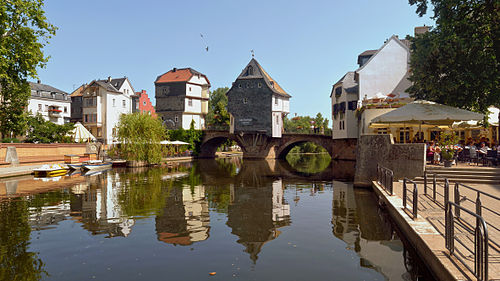
Bad Kreuznach is a charming city located in the western part of Germany, within the state of Rhineland-Palatinate. It lies along the scenic banks of the Nahe River and showcases a rich historical legacy intertwined with natural beauty. With a population of approximately 45,000, Bad Kreuznach is renowned for its therapeutic hot springs and spa culture, which have attracted visitors since the Middle Ages. The city's name, "Bad," indicating its spa status, highlights its role as a wellness destination, offering various treatments that utilize the mineral-rich waters sourced from the region.
The city boasts a picturesque old town with half-timbered houses, winding streets, and historic landmarks, creating an inviting atmosphere for both locals and tourists. One of the most notable sites is the Alte Nahebrücke, a medieval bridge that serves as a backdrop for scenic walks along the river. Bad Kreuznach is also home to several cultural institutions, including the Bad Kreuznach Museum, which houses art and artifacts that chronicle the city's history. Additionally, the city hosts annual events, such as the Kreuznacher Weinfest, celebrating the local wine culture that thrives in the surrounding vineyards. Access to the nearby Nahe wine region further enhances the city’s charm, providing opportunities for wine tasting and exploring local wineries.
The surrounding landscape enriches Bad Kreuznach's allure, framed by rolling hills, vineyards, and lush parks. Nature enthusiasts can take advantage of well-marked hiking and biking trails that meander through the picturesque countryside, making it an ideal destination for outdoor activities. The region is also part of the scenic Romantic Road and is conveniently located near larger cities such as Mainz and Bingen. Bad Kreuznach's blend of wellness, history, and natural beauty makes it a beloved destination, embodying the quintessential charm of a small German city while offering modern amenities and experiences for visitors.
Facts about Bad Kreuznach
- Bad Kreuznach is known for its unique saltwater thermal baths, a hallmark of its spa tradition that dates back to the Roman era.
- The city is famous for its historic wooden bridge, the Alte Nahebrücke, which dates back to the 14th century and is one of the oldest wooden bridges in Germany.
- Bad Kreuznach is home to the unique 'Kreuznacher Salin', an open-air saltwater evaporation pond used for therapeutic purposes, showcasing the town's commitment to health and wellness.
- The city hosts the annual Dürkheimer Wurstmarkt, regarded as the largest wine festival in the world, celebrating regional wine but also featuring the cultural significance of the surrounding area.
- The Nahe River, which passes through Bad Kreuznach, is famous for its scenic vineyards and contributes to the city's status as a center for wine production in the region.
- Bad Kreuznach has a rich history of being a spa town, with its health resorts attracting famous figures such as Richard Wagner and Queen Victoria in the 19th century.
- The city features the 'Heiliggeistkirche', a church built in the 14th century, notable for its impressive Gothic architecture and its presence in the heart of the town.
- Bad Kreuznach is historically significant for being a center of the 'Kreuznacher Schule', a movement of romantic landscape painters in the 19th century.
- The 'Burg Kallenfels', located just outside the city, is a historic castle ruin that offers panoramic views of the Nahe Valley and is a popular hiking destination.
- Bad Kreuznach offers a unique combination of spa culture, wine production, and picturesque nature, distinguishing it from other German towns.