Badajoz, Spain
- 148,334 people
- 10 places to visit
- 38.8794, -6.9707
Places to Visit (10)
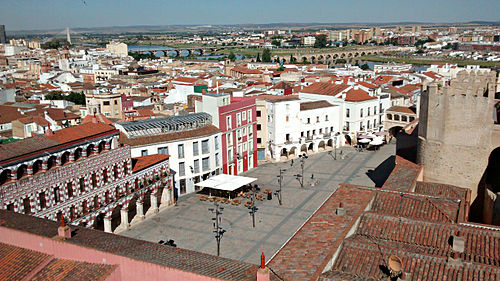
Badajoz, a historic city situated in the western part of Spain, serves as the capital of the province of the same name, within the autonomous community of Extremadura. Founded by the Moors in the 9th century, Badajoz has a rich cultural heritage that is evident in its architecture and urban layout. The city's geographical position along the banks of the Guadiana River has made it a crucial point of military and commercial interest throughout history. Its strategic location near the Portuguese border has fostered a blend of cultures, reflected in its traditions, cuisine, and festivals. The population of Badajoz is approximately 150,000 residents, making it one of the largest cities in Extremadura.
The city is home to several notable landmarks that attract visitors and locals alike. The Alcazaba of Badajoz, a Moorish fortress dating back to the 12th century, is a prominent feature, showcasing stunning views of the surrounding area. Other significant sites include the Cathedral of San Juan Bautista, which combines Gothic, Renaissance, and Baroque architectural elements, and the Plaza de España, a vibrant public square that serves as a cultural hub for events and gatherings. Badajoz also hosts various festivals throughout the year, such as the Carnival and the Feria de San Juan, drawing people from both near and far. The local gastronomy offers a taste of the region, with dishes such as "torta del casar," a rich cheese, and "migas," a traditional breadcrumb dish, highlighting the culinary influences characteristic of Extremadura.
Badajoz is not only known for its historical significance but also as an educational and economic center. The Universidad de Extremadura offers a range of academic programs, contributing to the city's youthful atmosphere. The local economy is diverse, with agriculture, services, and some light industry playing essential roles in its development. Transportation links, including a railway station and proximity to major highways, facilitate access to both national and international destinations. Badajoz's blend of historical charm, cultural richness, and modern amenities makes it an intriguing destination for those interested in exploring the lesser-known parts of Spain.
Facts about Badajoz
- Badajoz is known for its impressive Alcazaba, a well-preserved Moorish fortress built in the 12th century, which is one of the largest in Spain.
- The city was the site of the historic Battle of Badajoz in 1812 during the Peninsular War, where British forces captured the city from the French.
- Badajoz has a unique cultural blend due to its proximity to the Portuguese border, influencing its architecture, cuisine, and festivals.
- It is home to the oldest bullring in Extremadura, the Plaza de Toros de Badajoz, established in 1840 and still in use today.
- The city celebrates the Feria de San Juan in June, a vibrant festival featuring music, fireworks, and traditional food, attracting visitors from across the region.
- Badajoz boasts a rich artistic heritage, with museums showcasing works by local artists, particularly in modern and contemporary art.
- It has a significant Jewish heritage, evidenced by the well-preserved Jewish quarter, El Barrio Judío, which dates back to the Middle Ages.
- Badajoz is recognized for its extensive green spaces, including several parks and the beautiful Parque de Castelar, which is popular among locals.
- The city's economy is bolstered by agriculture, specifically the cultivation of olives, which is integral to the production of high-quality olive oil.
- Badajoz hosts the annual Festival Internacional de Música de Badajoz, featuring diverse musical genres and attracting international artists.