Baghdad, Iraq
- 7,216,000 people
- 17 places to visit
- 33.3152, 44.3661
Places to Visit (17)
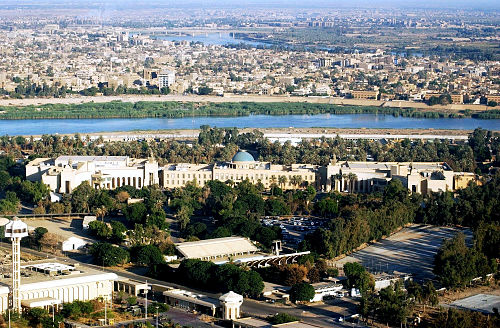
Baghdad, the capital city of Iraq, is situated along the banks of the Tigris River in the central part of the country. Founded in the 8th century during the Abbasid Caliphate, Baghdad quickly became a prominent center of culture, learning, and commerce in the Islamic world. The city's strategic location contributed to its growth as a key trade hub, connecting various civilizations across Europe, Asia, and Africa. At its zenith, Baghdad was known for its architectural marvels, including the House of Wisdom, which attracted scholars, poets, and scientists from across the globe.
Throughout its history, Baghdad has endured numerous challenges, including invasions and conflicts. It suffered significant devastation during the Mongol invasion in 1258, which marked a critical downturn in its status as a cultural capital. The city faced further turmoil in the 20th century, particularly during the Iraq War beginning in 2003, which resulted in widespread destruction and loss of life. Despite these challenges, Baghdad remains a city of resilience and enduring significance, with a population of over 8 million people. The city features a rich tapestry of cultural influences, evident in its diverse architecture, vibrant markets, and historical sites, such as the iconic Al-Mustansiriya School and the Al-Shaheed Monument.
Contemporary Baghdad is a city in transition, grappling with the aftermath of conflict while striving for stability and modernization. Efforts have been made to revive its historical significance and improve infrastructure, amid ongoing security concerns. Baghdad's economy primarily relies on oil production, but there are also movements to stimulate sectors like tourism and education. The city's distinctive character is shaped by a mix of traditions, arts, and religions, which continue to coexist despite the adversities it has faced. As Iraq seeks to rebuild and redefine itself in the 21st century, Baghdad remains a focal point of hope, heritage, and ongoing change in the region.
Facts about Baghdad
- Baghdad is the capital and the largest city of Iraq, located along the Tigris River.
- Founded in the 8th century by Caliph Al-Mansur, Baghdad became a cultural, commercial, and intellectual center during the Islamic Golden Age.
- The city is home to the University of Baghdad, established in 1957, which is one of the largest universities in the Arab world.
- Baghdad features the historic Al-Mustansiriya School, one of the first universities in the world, founded in 1233 during the Abbasid era.
- The famous round city of Baghdad, or 'Madinat al-Salam', was designed as a circular city with the caliph's palace at its center.
- Baghdad's National Museum houses one of the world’s richest collections of Mesopotamian artifacts, showcasing Iraq's ancient history.
- The city has a significant historical landmark known as the Baghdad Citadel, which served as the seat of power for the Abbasid caliphs.
- Baghdad has hosted several international events, including the Arab League Summit and the Asian Football Confederation Cup.
- Despite conflicts, Baghdad has a vibrant cultural scene, known for its rich traditions in poetry, music, and art.
- The city has faced numerous challenges, including the Gulf War and the Iraq War, but continues to be a symbol of resilience and cultural heritage.