Baise, China
- 686,078 people
- 3 places to visit
- 23.9022, 106.6184
Places to Visit (3)
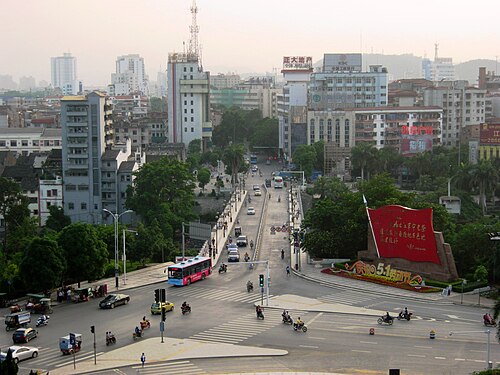
Baise is a city located in the Guangxi Zhuang Autonomous Region of southern China. It serves as the administrative center of Baise City and is known for its rich cultural heritage and diverse ethnic communities, primarily the Zhuang people, who are the largest minority group in China. Established as a city in 1994, Baise has a population of over 3 million people and covers an area of approximately 36,000 square kilometers. The region is characterized by its mountainous terrain, lush greenery, and a subtropical climate that supports a variety of agriculture, including rice, sugarcane, and fruits.
Historically, Baise is significant for its contributions to the revolutionary movement in China, particularly for its role in the establishment of the Chinese Communist Party in the early 20th century. The Baise Uprising in 1929 marked a pivotal moment in the communist struggle in southern China. Today, the city is known for its cultural landmarks, such as the Baise Revolutionary Museum and the various ethnic festivals that celebrate the traditions of its local communities. The economy of Baise has been transforming in recent years, with developments in mining, agriculture, and tourism. The city also aims to promote its natural beauty, including attractions like the Bama Longevity Village, famous for its high number of centenarians, and the scenic sights of the nearby Dashi Mountain, drawing visitors interested in both adventure and cultural experiences.
Facts about Baise
- Baise is known as the 'Red City' due to its significant role in the Chinese communist revolution, particularly during the Baise Uprising in 1929.
- The city is home to the Baise Monument to the Red Army, which commemorates the historical struggles and sacrifices during the revolutionary period.
- Baise is situated in the Guangxi Zhuang Autonomous Region and is recognized for its rich cultural diversity, including the presence of various ethnic minority groups such as the Zhuang, Yao, and Miao.
- The Nanning–Baise Railway, which connects Baise to the regional capital of Nanning, has enhanced trade and transportation, making it a vital economic hub in the area.
- Baise is famous for its unique karst landscapes, featuring picturesque hills and rivers that attract nature enthusiasts and tourists.
- The city is known for its traditional bamboo weaving craft, which is a vital part of the local economy and cultural heritage.
- Baise hosts the annual Baise Teapot Festival, celebrating the area's rich tradition of teapot artistry and attracting artisans and visitors from across China.
- The city has made significant strides in poverty alleviation, often being cited as a model for rural development and government initiatives in the region.
- As a historical site, Baise has a variety of preserved ancient villages that showcase traditional architecture and ways of living, distinct from other urban centers in China.
- Baise's involvement in ecological restoration efforts distinguishes it from many cities in China, as it works towards promoting sustainable practices and protecting local biodiversity.