Balkh, Afghanistan
- 114,883 people
- 1 places to visit
- 36.7551, 66.8975
Places to Visit (1)
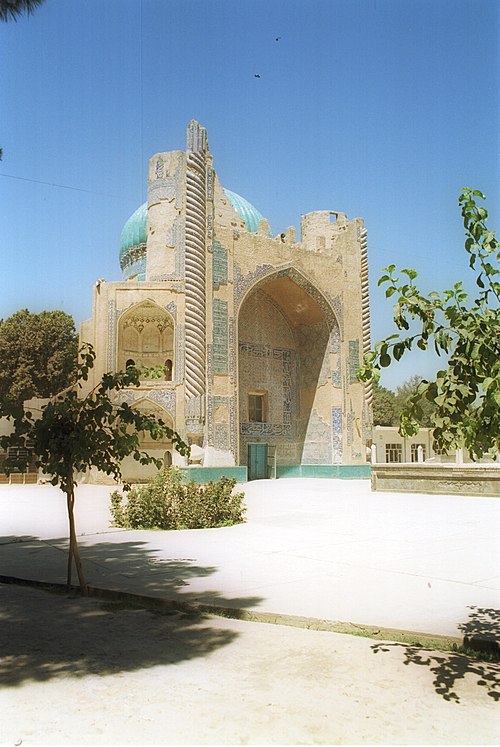
Balkh, one of the oldest cities in Afghanistan, is located in the northern part of the country, near the border with Uzbekistan. Known historically as Balkh or Bactra, it has roots that trace back to ancient times, often referred to as the "Mother of Cities." Balkh was a significant cultural and economic center in various empires, including the Persian Empire, the Greco-Bactrian Kingdom, and the Kushan Empire. Its strategic location along the Silk Road facilitated trade and cultural exchange, contributing to its wealth and prominence in antiquity.
Today, Balkh is part of Balkh Province and remains an important center for agriculture, with its fertile land supporting the cultivation of crops like wheat, cotton, and fruits. The city is known for its archaeological sites, such as the ruins of the ancient citadel, which highlight its historical significance. There are also noteworthy sites of religious and cultural importance, including the beautifully restored mausoleum of Ali ibn Abi Talib, which attracts pilgrims and tourists alike. Despite its rich heritage, the city, like much of Afghanistan, has faced challenges due to decades of conflict and instability, impacting its infrastructure and economy. Nonetheless, Balkh's storied past continues to be a source of national pride, as efforts are made to preserve its historical sites and promote cultural tourism.
In recent years, there have been initiatives aimed at boosting local development and rebuilding the city’s economy through tourism, trade, and infrastructure improvement. The city's diverse population, comprising various ethnic groups, including Tajiks, Uzbeks, and Hazaras, reflects the rich tapestry of Afghan culture. As Balkh continues to navigate the complexities of contemporary Afghanistan, it remains a symbol of resilience and cultural heritage, inspiring hope for a more stable future.
Facts about Balkh
- Balkh is one of the oldest cities in Central Asia, often referred to as the 'Mother of Cities' due to its historical significance and rich cultural heritage.
- The city was a major center of Zoroastrianism before the rise of Islam, and it was home to the ancient fire temple known as the Temple of Ahura Mazda.
- Balkh served as a prominent cultural and economic hub during the time of the Silk Road, facilitating trade between the East and West.
- The famous Persian poet Rumi was born in Balkh in 1207, making it a significant place in literary history, although he later moved to what is now Turkey.
- The ruins of the ancient city of Balkh, known as 'Balkh-e Mazar', contain remnants of significant historical structures, including mosques and madrasas.
- Balkh is home to the historic Green Tomb (Ghazni Tomb), which is believed to be the burial site of Bahauddin Naqshband, the founder of the Naqshbandi Sufi order.
- The city features the historic Citadel of Balkh, which dates back to the 5th century BC, showcasing its ancient fortifications and architecture.
- Balkh was a center of learning and scholarship during the Islamic Golden Age, hosting many scholars and poets who contributed to Persian literature.
- The city's strategic location at the crossroads of trade routes has influenced its diverse cultural heritage, blending Persian, Turkic, and Islamic traditions.
- Balkh has a unique legacy of resilience, having been rebuilt multiple times throughout its long history despite facing numerous invasions and destruction.