Bangui, Central African Republic
- 812,407 people
- 5 places to visit
- 4.3621, 18.5828
Places to Visit (5)
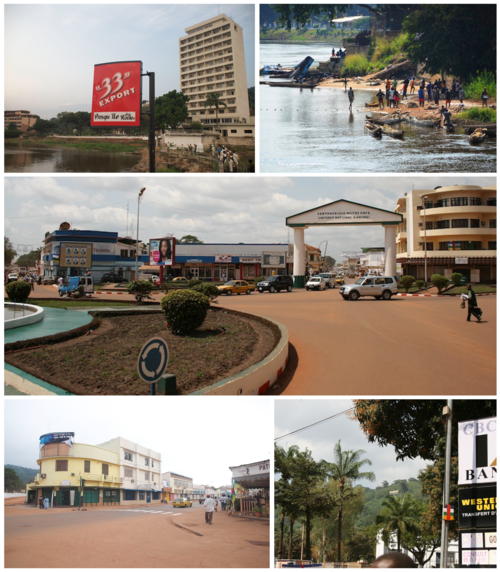
Bangui is the capital and largest city of the Central African Republic (CAR), situated on the banks of the Ubangi River, which forms part of the natural border between CAR and the Democratic Republic of the Congo. As of the latest estimates, Bangui has a population of over 700,000 residents, making it a cultural and economic hub in a country characterized by diverse ethnic groups and languages. The city plays a crucial role in the country's administration and serves as a central point for governmental operations, commerce, and transportation. Although Bangui has experienced significant challenges, including political instability and conflict, it remains a vibrant urban center with a mix of French colonial architecture and local designs reflective of Central African culture.
The economy of Bangui is relatively informal, with many residents engaged in small-scale commerce and subsistence agriculture. Key economic activities include the trade of agricultural products, handicrafts, and textiles. The city hosts several markets, such as the bustling PK5 market, where local goods and produce are bartered and sold. In addition to its economic importance, Bangui is also home to several educational institutions, healthcare facilities, and cultural organizations, which contribute to the community's development. Despite the country's ongoing socio-political challenges, efforts by national and international organizations aim to promote stability and growth in the region. The natural beauty surrounding Bangui, with its riverine landscapes and access to nearby national parks, offers potential for eco-tourism, although such opportunities remain largely untapped due to periodic conflicts and infrastructural limitations. Overall, Bangui stands as a city of resilience and potential within the Central African Republic, reflecting the rich history and culture of its people amidst contemporary adversities.
Facts about Bangui
- Bangui is the capital and largest city of the Central African Republic, serving as the political, economic, and cultural hub of the country.
- The city is located on the banks of the Ubangi River, which serves as a natural border between the Central African Republic and the Democratic Republic of the Congo.
- Bangui is home to the National Museum of the Central African Republic, which showcases the country's rich cultural heritage, including traditional masks, musical instruments, and handicrafts.
- The city features the impressive Cathedral of Bangui, also known as the Cathedral of Our Lady of the Immaculate Conception, which is a significant landmark due to its unique architecture and historical importance.
- Bangui has hosted several important international conferences, including peace talks for the Central African Republic's ongoing conflicts, marking its role in regional diplomacy.
- The city is known for the Monument to the Central African Republic's Independence, symbolizing the country's history and its journey towards self-governance since gaining independence from France in 1960.
- Bangui is a center for commerce in the region, featuring a bustling market, the Bangui Central Market, where local goods, crafts, and food products are traded.
- This city serves as a logistical gateway for humanitarian aid and international missions aimed at stabilizing the region, especially during times of crisis.
- Bangui's diverse population includes various ethnic groups and cultures, contributing to a rich tapestry of traditions and festivals celebrated in the city.
- The government of the Central African Republic is headquartered in Bangui, making it the focal point for political activities and national decision-making.