Baoji, China
- 1,437,802 people
- 6 places to visit
- 34.3632, 107.2377
Places to Visit (6)
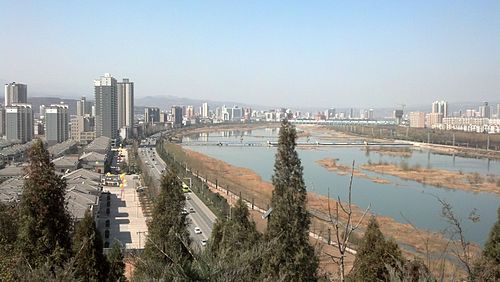
Baoji is a city located in the northwestern part of Shaanxi Province in China, known for its rich history and cultural significance. Situated at the confluence of the Wei River and the Luo River, Baoji serves as a vital transportation hub in the region, connecting various communication routes that facilitate trade and travel. The city's strategic location has historically made it a crucial point for different dynasties throughout China's long history, particularly as it lies near the ancient Silk Road. Baoji's historical importance is underscored by its archaeological sites, such as the famous Baoji Stone Carvings, which date back to the Han Dynasty and offer insights into the artistic expressions of ancient China's diverse cultures.
The economy of Baoji is diverse, with significant contributions from various sectors, including manufacturing, agriculture, and tourism. The city is especially noted for its production of high-quality metalwork and machinery, as well as its mining industry, which exploits the rich mineral resources of the surrounding area. Agriculture also plays a crucial role in the local economy, with the fertile lands around Baoji supporting the cultivation of various crops, including wheat and corn. In recent years, Baoji has increasingly focused on developing its tourism sector, capitalizing on its historical landmarks and natural attractions, including the nearby Qinling Mountain range, which offers a wealth of outdoor recreational opportunities and biodiversity.
Culturally, Baoji is rich in traditions, blending various ethnic influences, notably from the Han majority and other ethnic groups that inhabit the region. The city is home to numerous cultural festivals, traditional handicrafts, and local cuisine, which reflects the flavors of Shaanxi Province. One of Baoji's standout features is the Baoji Museum, which showcases the city's historical artifacts and cultural heritage, attracting visitors interested in the region's past. As it continues to develop and modernize, Baoji remains a city that honors its historical roots while embracing contemporary advancements, making it a unique place to explore both the ancient and modern facets of China.
Facts about Baoji
- Baoji is known as the 'Steel City of China' due to its rich history in metallurgy and the production of iron and steel.
- The city is located in Shaanxi Province and is situated at the foot of the Qin Mountains, making it a strategic geographical hub.
- Baoji has a history dating back over 4,000 years, and it was the capital of the Zhou Dynasty from 1046 to 771 BC.
- The city is home to the Baoji Bronze Ware Museum, which showcases the region's rich history in bronze casting, particularly from the Zhou Dynasty.
- The ancient site of Famen Temple, located near Baoji, is famous for its discovery of the finger bone relic of the Buddha, making it a significant Buddhist pilgrimage site.
- Baoji is one of the key railway hubs in northwest China, with a significant railway junction that connects routes to various parts of the country.
- The Baoji Guanyin Temple, renowned for its beautiful architecture and extensive gardens, is a popular tourist attraction and reflects the city's cultural heritage.
- The city's economy is not only based on metallurgy but also on the production of machinery, electronics, and textiles, making it a diverse industrial center.
- Every year, Baoji hosts the Baoji International Folk Art Festival, celebrating cultural diversity with performances and exhibitions from various ethnic groups.
- Baoji is the birthplace of several ancient Chinese inventions and innovations, particularly in agriculture, including early rice cultivation techniques.