Bârlad, Romania
- 67,818 people
- 9 places to visit
- 46.2277, 27.6692
Places to Visit (9)
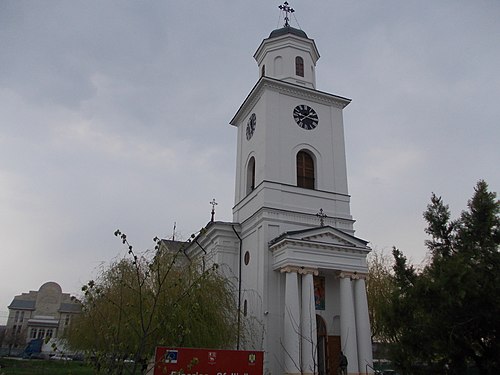
Bârlad is a city located in eastern Romania, within Vaslui County. Positioned at the confluence of the Bârlad River and the Siret River, it serves as an important cultural and economic center for the region. With a population of approximately 55,000 residents, Bârlad is one of the more significant urban areas in the Moldavia region. The city is well-connected to other parts of Romania by road and rail, facilitating trade and travel. Historically, Bârlad has been a vital commercial hub, with roots tracing back to the medieval period when it was recognized for its trading activities.
The city's history is rich, showcasing a blend of cultural influences due to its strategic location. Among its notable historical landmarks is the Church of Saint Nicholas, built in the 17th century, which exhibits beautiful Byzantine architecture. Additionally, the city is home to several museums, including the Bârlad History and Archaeology Museum, which showcases artifacts from various periods, highlighting the area's historical significance. The annual Bârlad Festival of Folk Dance and Music attracts visitors by celebrating regional traditions and arts. In spite of its modest size, Bârlad contributes to the cultural mosaic of Romania through its festivals, educational institutions, and ongoing community events that aim to preserve local heritage while promoting modernization. The city embodies the essence of Moldavian traditions while adapting to contemporary changes and challenges.
Facts about Bârlad
- Bârlad is known for its rich cultural heritage, particularly in folklore and traditional music, hosting numerous festivals throughout the year.
- The city is home to the 'Museum of the Bârlad Fortress', which showcases the historical significance of the area's fortifications dating back to the Middle Ages.
- Bârlad is famous for the annual 'Bârlad Film Festival', which promotes emerging filmmakers and celebrates cinema in the region.
- The city has a unique architectural blend, with numerous examples of neo-Gothic and neo-Romanian styles, particularly seen in the historic buildings of its town center.
- Bârlad is often referred to as the 'City of Bards' due to its connection to prominent Romanian poet George Coșbuc, who spent part of his childhood there.
- The city is also known for the 'Bârlad River', which has played a crucial role in the development and livelihood of the area since ancient times.
- Bârlad is notable for producing a variety of traditional Romanian crafts, including pottery and textiles that reflect the local culture and artistry.
- The city hosts the 'International Festival of Folklore', which attracts performers and visitors from various countries, highlighting its cultural diversity.
- Bârlad is recognized for its educational institutions, particularly the 'Mihai Eminescu' National College, known for producing many distinguished alumni.
- In 1875, Bârlad became one of the first cities in Romania to have electric street lighting, showcasing its early embrace of modernization.