Barletta, Italy
- 93,279 people
- 16 places to visit
- 41.3197, 16.2838
Places to Visit (16)
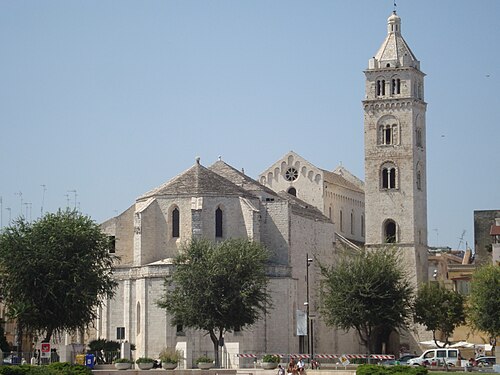
Barletta is a historic city located on the Adriatic coast of Italy, within the Apulia region. It is the capital of the province of Barletta-Andria-Trani and boasts a population of approximately 94,000 inhabitants. Known for its strategic position along the Adriatic Sea, Barletta has a rich history that dates back to ancient times, with evidence of settlements from the Italic tribes and later the Roman Empire. The city's name is derived from the Latin "Barulum," which hints at its historical significance as a trading and military hub.
One of Barletta's most notable landmarks is the colossal statue known as the Colossus of Barletta, a 4.5-meter tall bronze statue believed to represent Emperor Theodosius I or a Roman general. This statue, along with its impressive medieval fortress, the Castillo Svevo, reflects the city’s blend of historical influences. Barletta is also famed for the Battle of Barletta in 1503, where a group of Italian knights fought against the French in a legendary contest of valor. The city boasts beautiful baroque architecture, particularly visible in the Cathedral of Santa Maria Maggiore and several palaces that line its streets, making it an interesting fusion of ancient and Renaissance designs.
Cultural events play a significant role in the life of Barletta. The city is particularly known for its annual celebrations, such as the Palio della Rinascita, which features medieval games and historical reenactments. The local cuisine is also a highlight, with traditional dishes that reflect the agricultural bounty of the Apulia region, including fresh seafood, handmade pasta, and a wide array of local wines. With its charming coastal views, rich heritage, and vibrant cultural life, Barletta continues to be a point of attraction for both tourists and scholars interested in Italy's historical narratives and architectural marvels.
Facts about Barletta
- Barletta is famous for the 'Giants of Barletta', a group of five oversized bronze statues that depict biblical figures, believed to be from the 15th century.
- The city is home to the historic Barletta Castle, known as Castello Svevo, which dates back to the 12th century and features a unique mix of architectural styles.
- Barletta gained prominence during the Italian Wars in the early 16th century, notably being the site of the famous 'Challenge of Barletta' in 1503, where knights showcased their prowess.
- Every four years, Barletta hosts the Palio di Barletta, a historic horse race that dates back to the Middle Ages, making it a significant cultural event in the region.
- The city's cathedral, Basilica di Santa Maria Maggiore, is renowned for its remarkable Romanesque architecture and houses a revered relic: the skull of the patron saint, San Ruggero.
- Barletta is known for its unique dialect, which is a blend of Apulian and Latin influences, distinguishing it culturally from other regions in Italy.
- The city boasts a beautiful seaside promenade along the Adriatic coast, known as Lungomare, which is popular for leisure activities and local gatherings.
- Barletta played a strategic role in maritime trade due to its favorable position on the Adriatic Sea, influencing its economic development over centuries.
- The Colossus of Barletta, a massive bronze statue thought to represent the Emperor Constantine, is another iconic landmark and symbolizes the city's rich ancient history.
- Barletta participated in the Unesco project to enhance its cultural heritage, focusing on the preservation of its historical sites, thus setting it apart in efforts of cultural recognition.