Bayonne, France
- 44,396 people
- 14 places to visit
- 43.4934, -1.4757
Places to Visit (14)
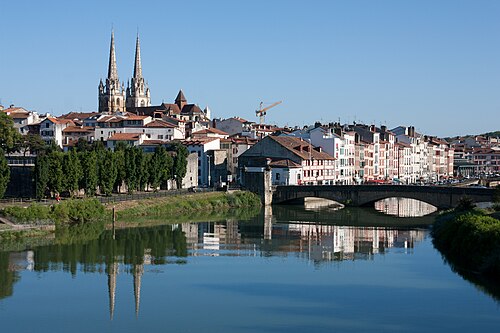
Bayonne is a historic city located in the southwestern region of France, nestled at the confluence of the Nive and Adour rivers. It is the prefecture of the Pyrénées-Atlantiques department and part of the Nouvelle-Aquitaine region. With a population of roughly 50,000 residents, Bayonne serves as an important cultural and economic hub. Its rich history dates back to Roman times, and it has evolved into a vibrant city known for its unique blend of Basque and Gascon cultures. The city's architecture showcases a variety of styles, reflecting its diverse heritage, with timber-framed houses, grand churches, and the impressive Bayonne Citadel, a fortress built in the 17th century by the French military engineer Vauban.
Bayonne is particularly renowned for its culinary traditions, most notably its local ham, "Jambon de Bayonne," which has received recognition for its quality and flavor. The city is also famous for its chocolate, with several artisan chocolatiers offering a rich array of handmade confections. As a gateway to the Basque Country, Bayonne celebrates its vibrant culture through numerous festivals and events, notably the Fêtes de Bayonne, which attracts thousands of visitors each year to enjoy lively parades, concerts, and traditional Basque music and dance. The city's blend of history, culture, and cuisine makes it an attractive destination for tourists seeking to experience the unique charm of southwestern France.
In addition to its cultural offerings, Bayonne's strategic location provides easy access to the scenic Basque coastline and the nearby Pyrenees mountains, making it an ideal base for outdoor activities such as hiking, surfing, and exploring charming coastal towns like Biarritz and Saint-Jean-de-Luz. The city's commitment to preserving its heritage while promoting contemporary urban development has fostered a vibrant community atmosphere, drawing both locals and travelers alike. With its picturesque streets, rich history, and distinct cultural identity, Bayonne stands out as a notable destination in France for those looking to immerse themselves in the beauty of the Basque region.
Facts about Bayonne
- Bayonne is known for its rich Basque culture, distinguished by its unique language, cuisine, and traditions, setting it apart from other French cities.
- The city is home to one of the largest and best-preserved citadels in France, the Citadel of Bayonne, built in the 17th century by the famous military engineer Vauban.
- Bayonne hosts the annual Fêtes de Bayonne, one of the largest festivals in France, celebrating Basque culture with parades, music, and traditional sports.
- The city is a significant center for chocolate production in France, with a history dating back to the 17th century when chocolate was first introduced to Europe.
- Bayonne is situated at the confluence of the Nive and Adour rivers, offering picturesque waterfront views that are unique among French cities.
- The Bayonne Cathedral, a UNESCO World Heritage site, is a stunning example of Gothic architecture and features an iconic double nave.
- Bayonne is part of the Basque Country, which is known for its distinct culinary traditions, including pintxos, which are unique to this region.
- The city has an impressive ramparts system that was originally constructed for defense against invasions, showcasing a blend of medieval and military architecture.
- Bayonne is recognized for its cross-border significance, lying near the Spanish border and functioning as a cultural bridge between France and Spain.
- The Old Town of Bayonne is characterized by its narrow streets, half-timbered houses, and vibrant markets, giving it a charm that is distinct from many other French towns.