Baza, Spain
- 23,359 people
- 6 places to visit
- 37.4862, -2.777
Places to Visit (6)
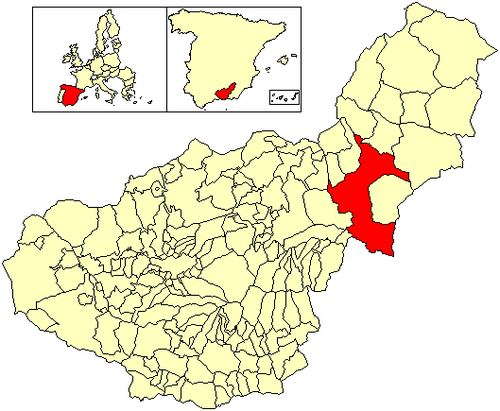
Baza is a historic city situated in the province of Granada, in the autonomous community of Andalusia, Spain. Nestled in the eastern part of the Sierra de Baza mountain range, it lies at an elevation of approximately 900 meters above sea level. The city has a population of around 20,000 inhabitants and is renowned for its rich cultural heritage, which showcases a blend of various historical influences, including Iberian, Roman, Moorish, and Christian. The area has been inhabited since prehistory, and archaeological findings indicate that it was an important center during the ancient Iberian civilization. The city is also noted for the presence of the nearby ancient sites of Cueva de la Adivinanza, which reveal remnants of early human settlements.
Baza boasts a wealth of architectural and historical landmarks. The most prominent of these is the Church of Santa Maria, which was built on the site of a former mosque and showcases a mix of Gothic and Mudejar architectural styles. Additionally, the city's old quarters feature narrow streets, whitewashed houses, and traditional Andalusian patios. Baza is also famous for the Baelo Claudia ruins, which highlight its significance during Roman times as a trading hub. The annual Baza Medieval Festival, held in September, celebrates the city's Moorish heritage through elaborate reenactments, music, and traditional food, drawing many visitors from across Spain and beyond. The city's economy is multifaceted, relying on agriculture, particularly the cultivation of olives and cereals, alongside growing tourism and services. As a gateway to the natural beauty of the Sierra de Baza Natural Park, the city offers opportunities for outdoor activities such as hiking and bird-watching, making it a notable destination in southern Spain.
Facts about Baza
- Baza is home to the ancient Roman town of 'Basti', known for its archaeological heritage including the remains of a Roman theater.
- The city is renowned for its unique cave dwellings, which are a distinctive part of its historical architecture and dating back to the Moorish era.
- Baza hosts the annual 'Fiesta de las Cruces', a vibrant festival celebrated in May where locals decorate crosses with flowers and other ornaments.
- The famous 'Treasure of Baza', a significant archaeological find of gold and silver artifacts from the 3rd century BC, was discovered in nearby areas.
- Baza is located at the foot of the Sierra de Baza mountain range, offering stunning natural landscapes and opportunities for outdoor activities such as hiking and birdwatching.
- The city is recognized for its unique blend of Christian and Moorish architectural styles, visible in landmarks such as the Church of Santa María and the Alcazaba.
- Baza has a rich historical tradition in the production of handmade pottery, particularly during the Islamic period, which is celebrated in local craft markets.
- The city features the 'Enclave Arqueológico de Baza', an archaeological site that includes crucial findings pertaining to its Roman and Phoenician past.
- Baza's patron saint is Saint Eulalia, and her feast day is celebrated with various religious and cultural events that reflect the city's rich traditions.
- The nearby 'Parque Natural de Sierra de Baza' is a protected natural park known for its biodiversity, including various species of flora and fauna unique to the region.