Belfort, France
- 54,562 people
- 14 places to visit
- 47.6397, 6.8638
Places to Visit (14)
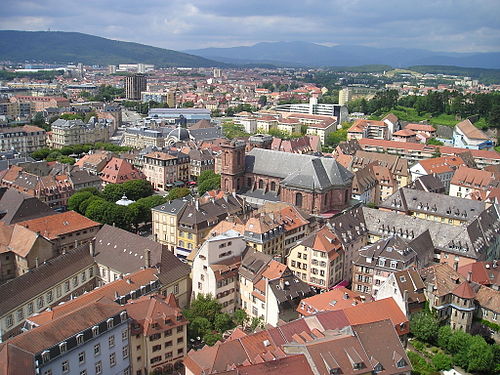
Belfort is a commune situated in the Bourgogne-Franche-Comté region of eastern France, known for its striking historic architecture and strategic location. Nestled at the foot of the Vosges Mountains and near the borders of Switzerland and Germany, Belfort has a rich history that dates back to its founding in the 14th century. The city is famous for its impressive citadel, designed by the military engineer Vauban in the 17th century, which stands as a UNESCO World Heritage site. The citadel is a symbol of the city's past military significance and offers panoramic views of the surrounding area. Belfort also boasts the Lion of Belfort, a monumental sculpture created by Bartholdi, the same artist responsible for the Statue of Liberty. This lion commemorates the city's defense during the Franco-Prussian War, further embedding Belfort's historical importance.
Economically, Belfort has evolved from its industrial roots, primarily focused on watchmaking and textiles in the 19th century, to a modern economy supported by sectors such as technology and engineering. The city is home to several prominent companies, including General Electric, which plays a significant role in the region's employment landscape. Belfort benefits from its robust transport links, including a railway station that connects it to major French cities and neighboring countries, enhancing its status as a regional hub. The city also hosts several annual events, cultural festivals, and local markets, reflecting its vibrant community spirit and dedication to preserving its cultural heritage.
With a population of around 50,000, Belfort is a relatively small city that offers a blend of historical charm and modern amenities. It maintains a variety of recreational spaces, including parks and gardens, which contribute to its quality of life. The city's commitment to ecology and sustainable urban development is evident through its initiatives promoting green spaces and public transportation. Thus, Belfort stands out not only for its historical significance and economic versatility but also for its conducive environment for residents and visitors alike.
Facts about Belfort
- Belfort is famous for its impressive citadel, designed by the military architect Vauban, which is a UNESCO World Heritage Site.
- The city is home to the Lion of Belfort, a monumental sculpture created by Auguste Bartholdi, the same artist who designed the Statue of Liberty.
- Belfort played a key role during the Franco-Prussian War, where it endured a long siege which is commemorated in local history.
- The city hosts the annual Belfort International Carnival, one of the largest carnivals in France, showcasing vibrant parades and traditional costumes.
- Belfort is situated near the intersection of France, Germany, and Switzerland, making it a unique cultural melting pot with influences from all three countries.
- The city boasts the unique 'Belfort’s Festival of Musical Theatre', which attracts numerous performers and audiences from around the world.
- Belfort has a rich industrial history, particularly known for its automotive and engineering sectors, which distinguish it from many other regions in France.
- The Belfort region is renowned for its beautiful landscapes, especially the Ballon d'Alsace, a popular site for hiking and winter sports.
- Belfort is marked by its unique architecture, combining traditional Alsatian styles with modern influences due to its diverse historical background.
- The city's 'Belfort-Montbeliard TGV station' connects it directly to major French cities and is among the most important rail hubs in the region.