Benevento, Italy
- 58,418 people
- 14 places to visit
- 41.1297, 14.7827
Places to Visit (14)
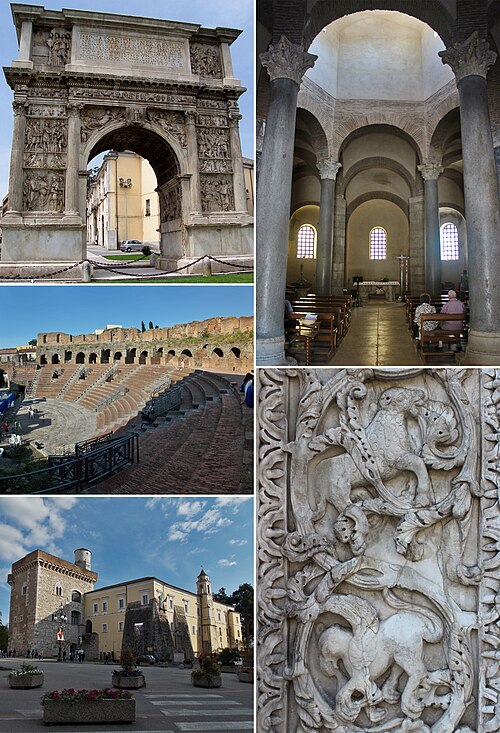
Benevento is a city in the Campania region of southern Italy, situated approximately 50 kilometers northeast of Naples. It serves as the capital of the Province of Benevento and is known for its rich history and cultural significance. The city's origins can be traced back to ancient times; it was originally a stronghold of the Samnites, a pre-Roman Italic people. Benevento gained importance under Roman rule, becoming a pivotal settlement due to its strategic location along the Via Appia, a major Roman road connecting Rome to the southeastern provinces. The remnants of Roman architecture can still be seen today, with significant monuments such as the Arch of Trajan, dedicated to Emperor Trajan in the early 2nd century.
Throughout the centuries, Benevento has witnessed various historical epochs, including rule by the Lombards, Normans, and the Papal States. The Lombards established Benevento as their capital in the 6th century, leading to the construction of several significant churches, including the Church of Santa Sofia, which is now a UNESCO World Heritage Site. The city is also known for its medieval charm, featuring narrow alleys and a mix of architectural styles that reflect its diverse influences over time. The local economy is supported by agriculture, notably the production of tobacco and wine, along with small-scale industries and services. Additionally, Benevento is recognized for its traditions and folklore, from local festivals to culinary delights, contributing to its vibrant community life.
Benevento is also a center for education and culture, home to the University of Benevento, which offers various programs and attracts students from different regions. The city's cultural calendar is filled with events ranging from theatrical performances to art exhibitions, showcasing both local talent and international artists. This combination of historical richness, educational opportunities, and cultural activities makes Benevento a unique destination for both tourists and scholars. With its picturesque landscapes, including the surrounding hills and valleys, and proximity to the larger urban centers of Campania, Benevento offers a blend of history, culture, and natural beauty that captivates visitors and residents alike.
Facts about Benevento
- Benevento is known for the Tempio di Giove, a Roman temple dedicated to Jupiter, which dates back to the 1st century BC, making it one of the most important ancient sites in the region.
- The city's historic arch, the Arco di Traiano, was built in 114 AD to honor Emperor Trajan and is noted for its stunning reliefs and unique construction for the time.
- Benevento was the site of the infamous 'Benevento Witch Trials' in the late Middle Ages, reflecting the city's historical association with witchcraft and superstition.
- The city is home to the long-standing tradition of the 'Civitas Beneventana,' which was an independent principality until it was annexed by the Kingdom of Italy in the late 19th century.
- Benevento boasts a unique blend of cultures due to its position along ancient trade routes, including Greek, Roman, Gothic, and Lombard influences evident in its architecture and cuisine.
- The city's name is derived from the Latin 'Bene Ventum,' meaning 'well come,' a reference to its favorable location and the purity of the region’s waters.
- Benevento is renowned for its production of the sweet liqueur known as 'Strega,' created by a local distillery in 1860, which uses a secret mix of herbs that contribute to its distinct flavor.
- One of the key events in the city's history is the Battle of Benevento in 1266, where Charles of Anjou defeated the forces of the Holy Roman Emperor Manfred, shaping the political landscape of Italy.
- The historic center of Benevento is a UNESCO World Heritage Site, recognized for its significant architectural and artistic heritage, including medieval churches and palaces.
- Benevento hosts the 'Festival of the Saint' in September each year, celebrating the patron saint of the city, Saint Bartholomew, featuring parades, fireworks, and traditional music.