Benghazi, Libya
- 757,490 people
- 5 places to visit
- 32.1194, 20.0868
Places to Visit (5)
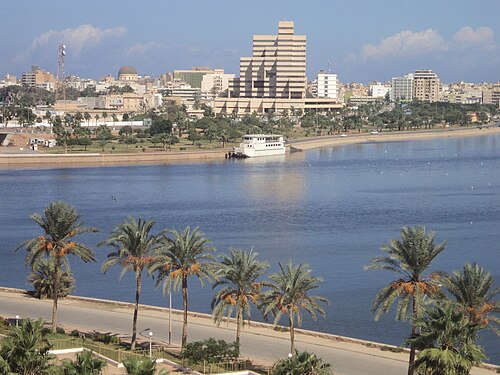
Benghazi is the second-largest city in Libya and serves as a major economic and cultural hub in the eastern part of the country. Located on the Mediterranean coast, it is situated approximately 1,000 kilometers east of the capital city, Tripoli. With a history dating back thousands of years, Benghazi has been influenced by various civilizations, including the Greeks, Romans, and Ottomans. The city was known as Euesperides in antiquity and has archaeological sites that reflect its long and rich history. Today, Benghazi is known for its vibrant markets, modern architecture, and a mix of Arab and Mediterranean cultures.
Benghazi's demographics reflect a diverse population primarily made up of Arab and Berber ethnic groups. The city has been a center of trade and commerce and was an essential maritime hub in the region. In recent years, Benghazi gained international attention during the Libyan Civil War, which began in 2011, when it became a focal point for opposition against the regime of Muammar Gaddafi. Conflicts in the region continued post-Gaddafi, culminating in a struggle for power and influence that led to increased violence and instability. Notably, the city has also been involved in significant incidents, including the 2012 Benghazi attack, which targeted a U.S. diplomatic compound and resulted in the deaths of four Americans, including Ambassador Chris Stevens.
Despite the challenges posed by ongoing political strife and militancy, efforts have been made to stabilize and rebuild the city. Benghazi is gradually recovering from the turmoil, with local initiatives aiming to restore its infrastructure and economy. The city remains a vital center for Libyan culture, known for its universities, historical sites, and growing arts scene. The complexities of its recent history, combined with its enduring cultural heritage, make Benghazi a significant and resilient city on the Mediterranean coast. As Libya continues to navigate its path towards peace and reconstruction, Benghazi stands as a testament to the country's rich past and potential for a hopeful future.
Facts about Benghazi
- Benghazi is the second-largest city in Libya, after Tripoli, and serves as a major economic and cultural hub in the eastern part of the country.
- The city played a crucial role in the Libyan Civil War of 2011, being one of the first cities to rise against Muammar Gaddafi’s regime, thus marking the start of the revolution.
- Benghazi is home to the iconic Plaza de la Liberté, a significant landmark that symbolizes the city’s role in the fight for freedom and democracy.
- The city features the historic 12th-century Al-Bari Mosque, one of the oldest mosques in Libya, showcasing the rich Islamic heritage of the region.
- Benghazi hosts the annual International Film Festival, which highlights its commitment to arts and culture, distinguishing it from other cities in Libya.
- The Benina Airport, located near Benghazi, is one of the country’s major international airports, facilitating trade and travel to and from the eastern part of Libya.
- Benghazi's ancient roots are visible in the remains of Cyrene, a UNESCO World Heritage site located nearby, which is one of the most significant Greek settlements in North Africa.
- The city has a diverse population reflecting various ethnic and cultural backgrounds, making it a melting pot compared to other Libyan towns.
- Benghazi is known for its vibrant port, which has historically been a key point for trade and commerce in the Mediterranean, influencing its local economy.
- The city was a focal point during the 2012 Benghazi attack, which brought international attention and highlighted issues of security and foreign relations in Libya.